How to Design a Small Shop Layout That Sells
your checkout experience could be costing you customers
Rent is charged by the square foot, whether customers use that square foot or not. That’s the slightly painful math behind running an independent shop in the UK. A chain store can carry a forgotten corner and barely notice. You probably can’t.
The upside is that most owners who wish for a bigger unit don’t actually need one. They need a clearer idea of what each part of the floor is for. Small shops also have one real advantage: changes show up fast. Move a display on Tuesday, and you’ll often know by the weekend whether it worked.
An Hour of People-Watching
It sounds too simple, but a good first step is a stool behind the counter. Bring a coffee, look busy with an invoice, and keep half an eye on the room. Note:
- the direction people go after their first few steps
- shelves that get walked past as if they’re invisible
- spots where someone stops and picks something up
Don’t be surprised if none of it matches your plan. Customers find their own way around, and they aren’t especially interested in yours.
Trouble usually shows itself during this hour. Maybe a table just inside the door leaves room for exactly one person, so the second one hovers, then gives up. They won’t tell you why. Or it’s the back corner where the dust settles undisturbed. Problems like these are easy to live with because they’re quiet. They still cost you.
Then get the tape measure. A scrappy sketch is fine. Mark what’s staying put, like pillars, windows and the till, and you’re planning for your real shop instead of the tidier one in your head.
Where The Money Walks
In retail design, the “golden triangle” refers to the key shopping area that connects the store entrance, its most popular products, and the checkout counter. Almost everyone who buys something crosses it, so that’s the natural home for your best-margin stock. Nobody has to discover it. They’re already walking that way.
Take a second look at the till while you’re there. Is it easy to find? Does the queue spill into the browsing space? Either can lose you a customer who’d already made up their mind; remember, your checkout experience could be costing you customers. A short, clear path to pay fixes a surprising amount.
One more check means stepping outside. Stand on the pavement and look in like a stranger would. An eye-catching display near the entrance sparks curiosity and encourages shoppers to explore parts of the store they might otherwise overlook. If nothing pulls you in, that’s worth knowing.
Give Your Stock Some Room
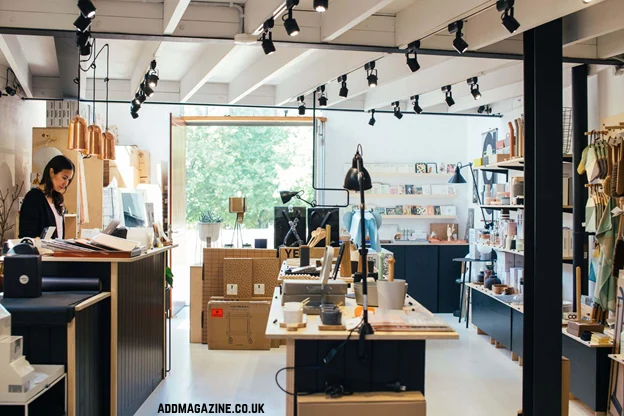
Owners often push back here, and fair enough. Every inch of retail display space matters, but filling every available spot can make merchandise harder to notice. When too many items compete for attention, customers may overlook products they would otherwise buy. A balanced arrangement with enough breathing room creates a cleaner, more inviting display and helps individual products stand out.
Showing less isn’t the goal. Try:
- Building upward, with taller shelves and a clear sign or two.
- Placing natural partners together, like scarves near coats or phone cases by handsets. An extra item often lands in the basket, and it feels like a helpful nudge rather than a hard sell.
- Lighting with intent. A well-lit display catches the eye on its own, so save it for bestsellers and new arrivals.
- Shuffling now and then. Refresh the window or turn a table around, and regulars have a reason to browse again.
Nothing here needs a big budget.
This Week
Designing a small shop layout that sells has more to do with people than products. How they move. What grabs their attention. And how you lead them toward the stock that matters most to your business. So watch first. Then pick one change, maybe the till or that neglected corner, and give it a couple of weeks. A small adjustment can go a long way, even in the snuggest of shops.