
Safetrode.com: A Guide to Earthing Equipment and Electrical Safety
Safetrode.com
Safetrode.com is associated with electrical grounding equipment used in buildings, industrial facilities, and infrastructure projects. Its subject area is earthing, a technical part of electrical installation that helps manage fault currents, control electrical hazards, and support the safe operation of connected equipment.
An electrical installation contains many components that work together to protect people and property. Wiring, circuit breakers, protective devices, and grounding connections each have a specific role. When a fault occurs, the system must provide an effective way to manage the resulting electrical conditions. A properly designed earthing arrangement contributes to this process by providing suitable electrical connections and helping limit dangerous differences in voltage.
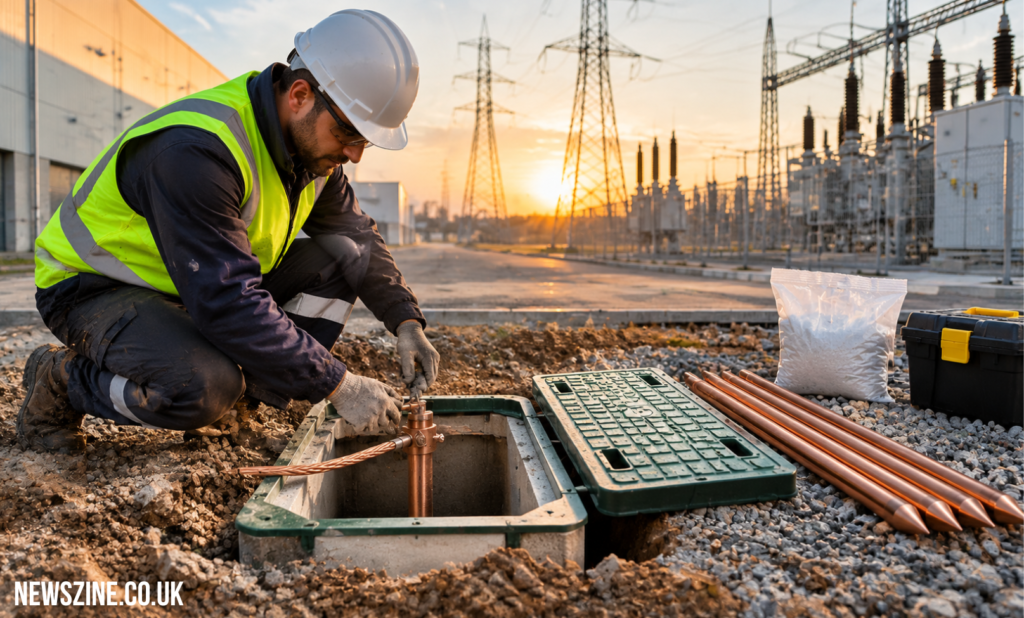
Grounding equipment includes electrodes, metal rods, connecting conductors, conductive backfill materials, and inspection chambers. Each component serves a practical purpose, and its selection depends on the installation’s requirements. Safetrode.com is relevant to this field because of its association with these types of products and the wider need for dependable grounding solutions.
Understanding the subject requires more than knowing the names of different products. Engineers and contractors must consider soil conditions, installation methods, material quality, environmental exposure, and maintenance requirements. These factors influence how a grounding system performs throughout its service life.
Understanding the Purpose of Earthing Systems
Earthing is an important element of electrical safety. It helps establish a connection between an electrical installation and the ground, while protective earthing connects exposed conductive parts to the installation’s protective conductor.
The purpose of these arrangements is to help manage electrical faults and reduce the risk of dangerous voltages appearing on equipment enclosures and other accessible metal surfaces. When a fault occurs, the electrical system must allow the relevant protective devices to respond under the conditions for which they were designed.
Without suitable protection, a damaged cable or failed insulation could create hazardous conditions around machinery, electrical panels, and appliances. Workers who touch an energised metal enclosure may face an electric shock risk.
An earthing system must therefore be designed as part of the complete electrical installation. Simply placing a metal rod in the soil does not guarantee adequate protection. The electrode must work with the protective conductors, bonding arrangements, and electrical devices installed at the site.
Safetrode.com fits into this area by focusing attention on the equipment used to construct grounding arrangements. For anyone researching the platform, understanding the function of each product category provides a useful starting point.
The Role of Grounding Equipment in Modern Buildings
Buildings contain electrical distribution boards, lighting circuits, heating and cooling equipment, lifts, pumps, and electronic systems. These installations need protection that remains effective during normal operation and under fault conditions.
Grounding equipment helps form part of the protective infrastructure supporting these systems. In commercial buildings, the design may include grounding electrodes connected to the building’s earthing network, protective conductors running throughout the installation, and bonding connections between appropriate conductive parts.
Industrial buildings often require more extensive arrangements because they contain larger electrical loads and complex machinery. A factory may have multiple distribution panels, motors, transformers, control cabinets, and automated production lines. Each part must be considered within the overall protection design.
The equipment selected for a building should match its electrical requirements and physical environment. Factors such as soil composition, available installation space, expected fault conditions, and the possibility of future expansion all influence the design.
A suitable grounding arrangement also needs accessible points for inspection. Maintenance teams must be able to examine connections, perform appropriate tests, and identify deterioration before it creates a serious problem.
Chemical Earthing Electrodes and Their Applications
Chemical earthing electrodes are used in grounding installations where specialised electrode designs or conductive materials may help improve the connection between the electrode and surrounding soil.
These systems vary in construction. Some incorporate conductive compounds around the electrode, while others use an arrangement designed to help maintain favourable electrical contact with the ground. The exact performance depends on the materials used, the electrode’s dimensions, and the conditions at the installation site.
One reason engineers consider these systems is that soil does not conduct electricity equally well everywhere. Dry, sandy, rocky, or otherwise high-resistivity ground can make it difficult to achieve the desired grounding performance using a basic electrode arrangement.
A chemical earthing system may help address certain site limitations, but its suitability must be established through proper assessment. The installation should account for moisture conditions, corrosion, environmental effects, and the long-term behaviour of the materials.
Contractors should examine the manufacturer’s specifications before choosing an electrode. Important details include construction quality, dimensions, connection methods, installation depth, and maintenance requirements.
Chemical earthing should not be treated as a universal replacement for conventional grounding. The correct choice depends on the engineering design, site investigation, and applicable electrical safety requirements.
Copper-Bonded Rods for Grounding Installations
Copper-bonded rods are another type of equipment associated with electrical earthing. They generally consist of a steel core covered by a copper layer. The steel provides mechanical strength, while the copper offers electrical conductivity and protection against corrosion when the coating remains intact.
These rods are driven into the ground to create an electrode connection. Their suitability depends on the required dimensions, the characteristics of the soil, and the mechanical conditions encountered during installation.
Material quality is important because the rod must withstand installation forces without suffering unacceptable damage. If the copper coating becomes damaged, the exposed steel may become more vulnerable to corrosion, potentially reducing the electrode’s service life.
The connection between the rod and the grounding conductor also deserves attention. An unsuitable connector or poorly completed joint can undermine the performance of an otherwise suitable electrode.
When selecting grounding rods through a supplier such as Safetrode.com, buyers should check the rod’s dimensions, material specifications, coating quality, and compatibility with the conductors and connectors used in the project.
The cheapest option is not necessarily the most economical over the long term. Durability, installation requirements, replacement costs, and the conditions at the site should all influence the purchasing decision.
Conductive Compounds and Ground Improvement
Grounding performance is influenced by the electrical properties of the soil surrounding an electrode. In some installations, conductive backfill compounds are used to improve the interface between the electrode and the surrounding ground.
These materials may be formulated to retain moisture, provide a conductive medium, or maintain contact around the electrode. Their purpose and installation requirements vary according to the product’s composition.
When correctly specified, a suitable backfill material can help engineers address certain soil-related challenges. However, its effectiveness depends on the local environment and the way it is installed.
The compound must be compatible with the electrode material and suitable for the surrounding soil. Environmental considerations are also important because the material should not introduce unacceptable contamination or adversely affect nearby structures.
Installers should follow the manufacturer’s instructions regarding preparation, placement, hydration, and curing where applicable. Improper mixing or installation can produce results that differ from the intended performance.
It is also important to understand that conductive compounds do not remove the need for testing. The completed grounding system must be assessed to determine whether it meets the design requirements.
Why Earth Inspection Chambers Matter
Grounding installations need inspection points that allow technicians to examine connections and carry out electrical tests. An earth inspection chamber provides access to the electrode connection while keeping it protected from routine environmental exposure.
The chamber is usually installed at ground level and fitted with a cover. Depending on its location, the cover may need to withstand pedestrian movement, maintenance activities, or vehicle loads.
A suitable inspection chamber should provide enough room to reach the relevant connection safely. It should also protect the installation against foreseeable physical damage and environmental conditions.
Poorly designed access points can make maintenance difficult. If technicians cannot reach a grounding connection without extensive excavation, routine testing may take longer and defects may remain unnoticed.
Inspection chambers therefore contribute to the maintainability of an electrical installation. Their importance extends beyond the physical protection of the electrode connection.
When selecting an earth pit cover, project teams should consider its dimensions, load capacity, material, resistance to weather exposure, and compatibility with the installation layout.
Soil Resistivity and Grounding Design
Soil resistivity is one of the main factors affecting the design of a grounding system. It describes how strongly a material opposes the flow of electrical current. Different soils can have substantially different resistivity values.
Moisture content, mineral composition, temperature, and soil structure all influence electrical behaviour. A site with damp, conductive soil may require a different electrode arrangement from one with dry sand or shallow rock.
For this reason, engineers should assess soil conditions before deciding how many electrodes to install and where to position them.
One established method of evaluating soil resistivity uses four probes arranged in a straight line. Measurements taken at different probe spacings can help engineers understand variations in the ground and estimate the resistivity relevant to the planned installation.
The findings can inform decisions about electrode length, placement, grounding grid design, and the possible use of specialised materials.
Soil conditions can also change over time. Seasonal drought, construction work, changes in drainage, and other environmental factors may influence grounding performance. A design that accounts for these conditions is more useful than one based on a single measurement without further assessment.
For projects involving equipment associated with Safetrode.com, site-specific testing helps establish whether a particular grounding product is appropriate.
Grounding in Industrial Environments
Industrial facilities rely on electrical systems to operate machinery, production equipment, pumps, compressors, and automated processes. A fault affecting one component can create risks for workers and disrupt operations across the facility.
Grounding arrangements help manage these risks by forming part of the protective electrical system. Metal frames, control cabinets, and other exposed conductive parts must be connected according to the installation’s design.
Industrial grounding can involve several interconnected components, including electrodes, buried conductors, bonding connections, and protective conductors. The design must consider the electrical characteristics of the facility and the fault conditions that may occur.
A production plant may also contain equipment that is sensitive to electrical interference. In these cases, grounding must be coordinated with cable routing, equipment bonding, surge protection, and the manufacturer’s installation requirements.
A low resistance measurement at one grounding point does not necessarily demonstrate that every part of an industrial facility is adequately protected. Engineers must evaluate the complete arrangement, including the potential for dangerous voltage differences during a fault.
Regular inspections and suitable testing help maintenance teams identify deterioration, loose connections, damaged conductors, and other problems that may affect performance.
Earthing for Telecommunications and Data Centres
Telecommunications infrastructure requires dependable electrical protection because network equipment often operates continuously. Mobile towers, communication shelters, server rooms, and data centres contain electronic systems that can be vulnerable to electrical surges and differences in ground potential.
Grounding and bonding help establish appropriate electrical relationships between equipment and connected infrastructure. These measures work alongside surge protective devices and other protections to manage electrical disturbances.
Data centres require careful coordination because power distribution, server racks, cooling equipment, and communication systems operate within the same environment. An electrical problem affecting one part of the installation can have consequences for connected equipment and service availability.
Telecommunications towers also face environmental risks, particularly where lightning exposure is significant. Their protection arrangements may include air terminals, down conductors, grounding electrodes, and protective devices for incoming power and communication lines.
The design must reflect the specific installation rather than relying on a single universal resistance target. Equipment layout, conductor routing, bonding, and transient behaviour all matter.
Grounding products should therefore be selected according to the technical requirements of the facility. Compatibility with the overall system is more important than choosing an individual component based on its description alone.
Lightning Protection and Electrical Surge Management
Lightning can introduce large electrical currents into buildings and infrastructure. Without an appropriate protection arrangement, these currents may contribute to fire, structural damage, equipment failure, or dangerous voltage differences.
A lightning protection system may include air terminals, down conductors, grounding electrodes, bonding connections, and surge protective devices. Each component has a distinct role in managing the event.
The grounding arrangement provides a path for current to enter the earth, but the complete system must also control the risks associated with differences in electrical potential. Conductor routing and bonding are particularly important during fast transient events.
Electrical and communication services entering a building may require suitable surge protection. This is especially relevant where sensitive electronic equipment is connected to external cables or exposed infrastructure.
A grounding electrode alone cannot provide complete lightning protection. The system must be designed and installed according to the applicable standards and the risks associated with the site.
For facilities considering products from the grounding equipment market, the focus should remain on the performance of the complete protective arrangement rather than an isolated component.
Conventional Earthing and Chemical Earthing Compared
Conventional earthing systems can use driven rods, buried plates, pipes, or interconnected electrodes. Their performance depends on the soil, installation method, electrode design, and overall grounding layout.
Chemical earthing systems introduce specialised materials or electrode arrangements intended to improve the electrical connection with the surrounding ground. They may be useful where site conditions create difficulties for conventional installations.
Neither method is automatically suitable for every project. Conventional electrodes may work well where the soil conditions and available space support the design. A specialised system may be considered where the engineering assessment identifies a particular need.
A meaningful comparison should include installation costs, expected durability, corrosion resistance, environmental considerations, testing requirements, and future maintenance.
Buyers should be cautious about claims that any grounding method will remain maintenance-free indefinitely. All installations require appropriate inspection, and their long-term performance depends on the materials, environment, and quality of installation.
The right decision is the one that meets the project’s technical requirements while providing dependable performance throughout the expected service life.
Maintenance and Testing of Earthing Systems
Grounding systems require inspection because their components can deteriorate over time. Corrosion, mechanical damage, soil movement, loose joints, and nearby construction activities can affect their condition.
A maintenance programme should establish suitable inspection intervals based on the type of facility, environmental exposure, applicable standards, and consequences of failure.
Technicians may examine visible connections, check conductor continuity, inspect electrode access points, and carry out appropriate earth resistance measurements. The testing method must match the system’s configuration.
Records are valuable because they allow engineers to compare measurements over time. A significant change may indicate corrosion, damage, altered soil conditions, or another problem that requires investigation.
Maintenance should not consist solely of adding more conductive compound whenever a resistance reading rises. The underlying cause should be identified, and any corrective action should follow the system’s design requirements.
Qualified personnel should carry out electrical testing using suitable equipment and safe procedures. A well-maintained grounding system is easier to evaluate and more likely to continue meeting its intended requirements.
Choosing Grounding Products From Safetrode.com
Anyone considering Safetrode.com should begin by identifying the needs of the proposed installation. A product suitable for a small building may not meet the requirements of a substation, manufacturing plant, or telecommunications tower.
The first step is to establish the required electrode type, conductor arrangement, installation dimensions, and performance criteria. Site conditions should then be assessed to determine which products are appropriate.
Product documentation should provide information about materials, dimensions, installation procedures, corrosion resistance, and compatibility with related components. Where a supplier claims compliance with a particular standard, the relevant documentation should be checked.
Buyers should also consider delivery arrangements, warranty terms, technical support, and the availability of replacement components. These practical details can affect project schedules and long-term maintenance.
It is important not to assume that every product category or technical feature discussed in general descriptions is currently available from Safetrode.com. Current inventory, pricing, company information, and product specifications should be confirmed directly with the supplier.
For larger projects, consultation with a qualified electrical engineer can help prevent unsuitable purchases and ensure that the selected equipment fits the overall design.
Conclusion
Safetrode.com is associated with electrical grounding equipment used in earthing installations. The relevant product categories include chemical electrodes, copper-bonded rods, conductive compounds, and inspection chambers. These components can support grounding arrangements in buildings, industrial facilities, telecommunications infrastructure, and other electrical applications.
Their effectiveness depends on the conditions in which they are used. Soil resistivity, electrode placement, conductor connections, corrosion resistance, and maintenance all influence the performance of a grounding installation.
Choosing the right equipment requires a clear understanding of the project’s requirements, supported by site assessment, technical documentation, and appropriate electrical testing. No single electrode or compound can replace a properly designed protective system.
For contractors, engineers, and facility managers, the priority should be to select compatible products, follow applicable standards, and establish a maintenance programme suited to the installation. This approach helps ensure that grounding equipment contributes effectively to electrical safety and the long-term reliability of the infrastructure it serves.