Martin O’Neill: A Complete Look at His Football Career, Management Success and Personal Life
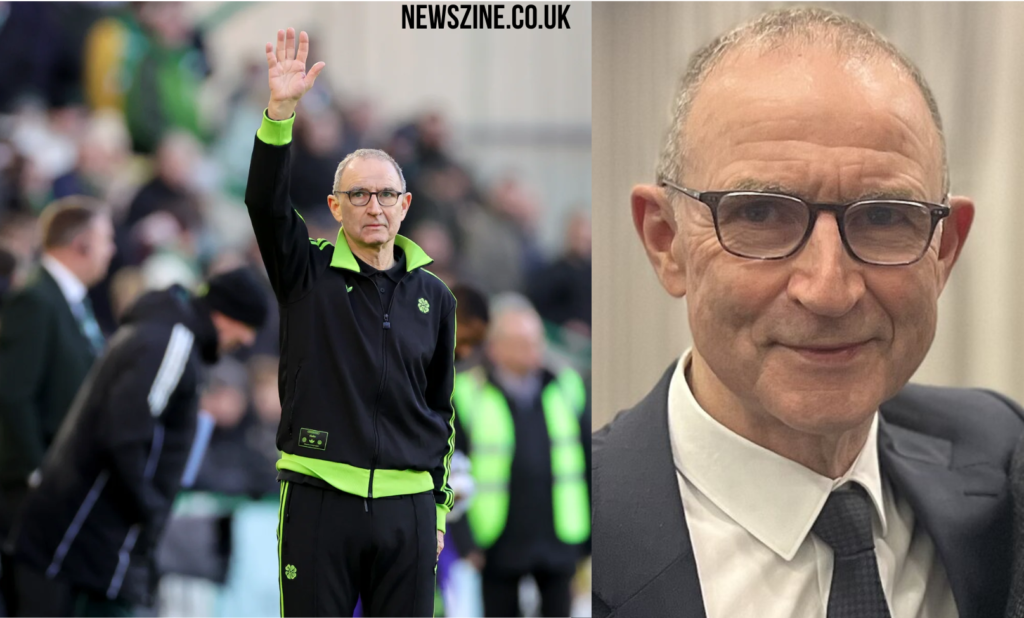
Martin O'Neill
Martin O’Neill is a Northern Irish football manager and former professional player whose career has covered more than five decades. He is widely recognised for his achievements with Nottingham Forest as a player and his successful managerial periods at Leicester City, Celtic and Aston Villa. His football journey includes European trophies, domestic championships, international tournaments and several challenging managerial appointments.
Born on 1 March 1952 in Kilrea, Northern Ireland, O’Neill developed an interest in sport during childhood. He initially played Gaelic football before concentrating on association football. His professional career eventually took him to England, where he became part of Nottingham Forest’s successful team under Brian Clough. He also represented Northern Ireland internationally and captained the national team at the 1982 World Cup.
After retiring from professional football, O’Neill moved into management and gradually established himself through smaller English clubs. His results at Wycombe Wanderers and Leicester City attracted attention from larger teams, leading to his appointment at Celtic in 2000. He later managed Aston Villa, Sunderland, Nottingham Forest and the Republic of Ireland national team.
His return to Celtic in 2025 and subsequent success in 2026 added another chapter to a career built around leadership, competition and experience.
Who Is Martin O’Neill?
Martin Hugh Michael O’Neill is a former midfielder who became one of the recognised figures in British and Irish football management. His reputation developed through his ability to organise teams, encourage players and produce competitive results in demanding environments.
Unlike many managers associated with just one club, O’Neill has worked in several different football settings. He has managed teams seeking promotion, clubs competing for major trophies and international players attempting to qualify for European competitions.
His career also includes experience at different levels of football. He began managing outside the Football League before progressing to the Premier League and major European competitions. This background helped him understand the challenges faced by clubs with different financial resources and expectations.
O’Neill’s professional record includes two European Cup victories as a player and numerous trophies as a manager. His involvement in football has continued into his seventies, making him an example of a manager whose career has extended across several generations.
Martin O’Neill’s Childhood and Education
O’Neill grew up in Kilrea, a town in County Londonderry, where sport was an important part of family and community life. He was one of nine children, with four brothers and four sisters. His family had strong connections with Gaelic football, and several relatives were actively involved in the sport.
His father helped establish the local Gaelic Athletic Association club, while his brothers Gerry and Leo played for Derry. Their participation encouraged O’Neill to become involved in organised sport from a young age.
He attended St Columb’s College in Derry before continuing his education at St Malachy’s College in Belfast. During these years, he participated in school competitions and developed his ability as a footballer.
Playing Gaelic football and association football created difficulties because of the sporting restrictions that existed at the time. However, O’Neill continued pursuing both interests during his younger years.
He later enrolled at Queen’s University Belfast to study law. His academic plans changed when professional football offered him an opportunity in England. Although he did not finish his degree, he retained an interest in legal subjects and criminal investigations throughout his life.
Early Football Career in Northern Ireland
Before becoming a professional player in England, O’Neill represented Rosario, a football club based in South Belfast. His performances eventually earned him a place at Distillery, where he began competing at a higher level.
Distillery provided his first significant experience of senior football. During the 1970–71 season, the club reached the Irish Cup final against Derry City. O’Neill played an important role in the match, scoring twice as Distillery secured a 3–0 victory.
The cup success gave Distillery an opportunity to participate in European competition. O’Neill subsequently played against Barcelona in the European Cup Winners’ Cup and scored during the encounter.
Although his club did not progress, those matches exposed him to a different standard of football and brought his performances to the attention of scouts.
Nottingham Forest eventually offered him the opportunity to move to England in October 1971. He accepted the transfer, leaving university and beginning a new stage of his career.
Nottingham Forest and His Playing Achievements
O’Neill spent the most important years of his playing career at Nottingham Forest. His early seasons were difficult because the club struggled for consistency and suffered relegation from the First Division in 1972.
The situation began changing when Brian Clough became manager in 1975. Clough introduced a different approach to team organisation and worked to create a competitive squad capable of returning to England’s highest division.
O’Neill became part of that rebuilding process. Forest earned promotion in 1977 and followed it by winning the English First Division title during the 1977–78 season.
The club’s achievements continued in Europe. Nottingham Forest won the European Cup in 1979 and successfully defended the trophy in 1980. These victories placed the club among the leading European teams of the period.
O’Neill was part of both successful squads, although an injury affected his involvement in the 1979 final. He returned to play in the 1980 final against Hamburg.
The experience of working under Clough influenced O’Neill’s later managerial approach. He observed how clear communication, confidence and effective organisation could help a team achieve results beyond initial expectations.
Martin O’Neill’s International Career
O’Neill represented Northern Ireland between 1971 and 1984, making 64 senior appearances and scoring eight goals. His international career included matches against strong European opponents and participation in major competitions.
His most notable achievement came during the 1982 FIFA World Cup in Spain. O’Neill captained Northern Ireland at the tournament and helped the team progress beyond the opening group stage.
One of the competition’s most memorable results occurred when Northern Ireland defeated Spain 1–0 in Valencia. Gerry Armstrong scored the winning goal, while O’Neill contributed as captain during a demanding match against the host nation.
Northern Ireland eventually reached the second group phase, exceeding expectations and creating an important moment in the country’s football history.
He also won the British Home Championship with Northern Ireland in 1980 and 1984. His international experience strengthened his understanding of leadership and the responsibilities associated with representing a national team.
The Final Years of His Playing Career
After leaving Nottingham Forest in 1981, O’Neill joined Norwich City. His first period at the club was followed by a move to Manchester City, although he did not remain there for long.
He returned to Norwich in 1982 and contributed to the club’s promotion campaign. Later, he played for Notts County as his career entered its final years.
Injuries increasingly affected his ability to maintain regular playing time. Knee problems became particularly serious and limited his attempts to return to competitive football.
He explored opportunities to continue playing with other clubs, including brief attempts to regain fitness, but the injuries prevented a successful comeback.
O’Neill retired from professional football in 1985. By then, he had experienced domestic league success, European competition and international football at World Cup level.
His playing career provided practical knowledge that would become valuable when he eventually moved into management.
Starting a Career in Football Management
Following retirement, O’Neill briefly worked outside professional football before returning to the sport as a manager.
His first managerial appointment came at Grantham Town in 1987. He subsequently worked at Shepshed Charterhouse, gaining experience in non-league football.
Managing smaller clubs presented different challenges from those he had experienced as a professional player. Financial resources were limited, squads were smaller and managers often had to take responsibility for several areas of club operations.
These early appointments allowed O’Neill to develop his coaching methods and understand the practical demands of team management.
His first major opportunity arrived in 1990 when he became manager of Wycombe Wanderers.
Success With Wycombe Wanderers
Wycombe Wanderers became the club where O’Neill established his managerial reputation. When he arrived, the team was competing outside the Football League and hoping to improve its position within English football.
O’Neill gradually developed a squad capable of challenging for promotion. His team became more consistent, and Wycombe emerged as serious competitors in the Football Conference.
The club achieved promotion to the Football League in 1993, representing an important milestone in its history. O’Neill then guided Wycombe to another promotion in 1994 through the play-offs.
His success was not limited to league competitions. Wycombe also won the FA Trophy in 1991 and 1993.
These achievements demonstrated his ability to build a team over several seasons and maintain progress after promotion.
He left Wycombe in 1995, having helped transform the club’s position within English football.
Leicester City and Premier League Recognition
O’Neill joined Leicester City in December 1995 after a brief spell managing Norwich City. Leicester were competing in the second tier and wanted to return to the Premier League.
His first major achievement came in 1996 when Leicester won promotion through the play-offs. The victory gave him an opportunity to manage regularly in England’s top division.
Leicester developed into a competitive Premier League team despite operating with fewer financial resources than several of their opponents.
O’Neill built a squad featuring players such as Neil Lennon, Muzzy Izzet, Matt Elliott and Emile Heskey. Their performances helped Leicester achieve respectable league finishes while also competing in domestic cup competitions.
The club won the League Cup in 1997 and again in 2000. Leicester also reached the final in 1999, giving O’Neill three appearances in the competition’s final during his managerial period.
His success attracted attention from other clubs, but he remained at Leicester until the summer of 2000.
Celtic and His First Spell in Glasgow
O’Neill became Celtic manager in June 2000, replacing the previous management arrangement after the club had experienced disappointing results against Rangers.
His appointment brought immediate changes. Celtic strengthened the squad and developed a more organised playing style that helped the team challenge for Scottish domestic honours.
The 2000–01 season ended with Celtic winning the Scottish Premier League, Scottish Cup and Scottish League Cup. Completing the domestic treble in his first season established O’Neill as a successful manager at the club.
Over the next four seasons, Celtic continued competing for major trophies. The team won three league titles during his first spell and regularly performed strongly against domestic opponents.
Players including Henrik Larsson, Chris Sutton, Stiliyan Petrov and Neil Lennon became important members of his squad.
One of his biggest achievements came in 2003 when Celtic reached the UEFA Cup final. The team defeated several European opponents before losing 3–2 to Porto after extra time.
Although Celtic did not win the European trophy, reaching the final represented an important achievement for the club.
O’Neill left Celtic in 2005 to support his wife during her treatment for lymphoma. His first managerial period ended with seven major trophies.
Aston Villa and His Return to English Football
After a period away from management, O’Neill returned in 2006 when he took charge of Aston Villa.
Villa were seeking greater consistency in the Premier League and wanted to compete regularly for European qualification.
O’Neill gradually improved the squad and developed a team capable of challenging clubs with larger budgets.
During his time at Aston Villa, several players became important contributors, including Ashley Young, Gareth Barry, James Milner and Gabriel Agbonlahor.
The club finished sixth in the Premier League for three consecutive seasons between 2008 and 2010. Villa also reached the League Cup final in 2010, although Manchester United won the match.
His years at Villa were characterised by competitive league performances and regular involvement in the race for European places.
However, disagreements regarding the club’s direction eventually contributed to his departure in August 2010.
Sunderland and Nottingham Forest Management
O’Neill became Sunderland manager in December 2011. The club was struggling in the Premier League, and his immediate responsibility was to improve results.
His appointment initially produced a positive response. Sunderland collected important points and moved away from the relegation positions.
However, performances became inconsistent during the following season, and the club again faced pressure near the bottom of the table.
O’Neill was dismissed in March 2013 after a difficult period of results.
Several years later, he returned to Nottingham Forest as manager in January 2019. The appointment attracted attention because of his successful playing history with the club.
Despite the personal connection, the managerial reunion was relatively short. He left Forest in June 2019 after several months in charge.
These appointments showed the difficulties managers can encounter when expectations, squad performance and available resources do not produce the desired results.
Managing the Republic of Ireland
O’Neill became manager of the Republic of Ireland national football team in November 2013, with Roy Keane serving as his assistant.
His central objective was to improve international performances and secure qualification for major tournaments.
Ireland faced a challenging qualifying group for Euro 2016, competing against teams including Germany, Poland and Scotland.
One of the most important results came in October 2015 when Ireland defeated Germany 1–0 in Dublin. The victory strengthened their qualification prospects.
Ireland eventually reached Euro 2016 after defeating Bosnia and Herzegovina in the play-offs.
At the tournament in France, the team advanced from the group stage after beating Italy. Their campaign ended in the round of 16 against France.
Qualification represented a major achievement, although later results were less successful. Ireland failed to reach the 2018 World Cup after losing to Denmark in the qualification play-offs.
O’Neill left the national team in November 2018 following a disappointing period of results.
Martin O’Neill’s Return to Celtic
O’Neill returned to Celtic in October 2025 as interim manager following Brendan Rodgers’ departure.
The appointment reunited him with a club where he had previously enjoyed considerable success. His immediate responsibility was to improve performances and provide stability during a managerial transition.
He initially stepped aside in December 2025 when Celtic appointed Wilfried Nancy. However, Nancy’s time at the club was brief, and O’Neill returned to the managerial position in January 2026.
The second appointment led to another successful period. Celtic recovered their position in the Scottish league competition and eventually secured the Premiership title on the final day of the 2025–26 season.
The club also won the Scottish Cup after defeating Dunfermline Athletic 3–1 in the final.
These achievements completed a domestic double and increased O’Neill’s record of trophies at Celtic.
His return was significant because it came more than two decades after his original appointment in Glasgow. Despite the changes in professional football, he demonstrated that his managerial experience remained valuable.
Martin O’Neill’s Football Philosophy
O’Neill’s management approach has traditionally focused on teamwork, organisation and confidence.
He believes players need clear responsibilities and an understanding of what the manager expects from them. His teams have often been recognised for their work rate, physical commitment and willingness to compete throughout matches.
He also places importance on the relationships between managers and players. His experience suggests that tactical planning alone does not guarantee results without motivation and commitment.
At Leicester, this approach helped a relatively modest squad challenge established Premier League opponents. At Celtic, it helped talented players perform consistently during domestic and European competitions.
His methods have not always been successful, particularly during periods when teams struggled against tactically flexible opponents. Nevertheless, his results across several clubs demonstrate the effectiveness of his approach in different circumstances.
Martin O’Neill’s Wife and Family Life
Martin O’Neill is married to Geraldine O’Neill, and the couple have two daughters.
He has generally kept his family life away from regular public attention, preferring to discuss professional football during interviews and appearances.
His departure from Celtic in 2005 was closely connected to his wife’s health. Geraldine had been diagnosed with lymphoma, and O’Neill chose to step away from management to spend more time with his family.
The decision reflected the importance of personal responsibilities alongside professional commitments.
Outside football, he has maintained an interest in law, criminal investigations and current affairs. He has also worked as a television football analyst and participated in discussions about major sporting events.
In 2022, he published his autobiography, On Days Like These, discussing different periods of his personal and professional life.
Career Achievements and Awards
O’Neill’s football achievements include major honours from both his playing and managerial careers.
As a Nottingham Forest player, he was part of the teams that won the English First Division title and two consecutive European Cups. He also captained Northern Ireland at the 1982 World Cup.
His managerial success began with promotions and trophy victories at Wycombe Wanderers. At Leicester City, he won two League Cups and established the club as a competitive Premier League side.
At Celtic, he won multiple Scottish league and cup titles, including the domestic treble in 2001 and the domestic double in 2026.
He also guided Celtic to the 2003 UEFA Cup final and helped the Republic of Ireland qualify for Euro 2016.
His services to football have received official recognition. He was appointed MBE in 1983 and OBE in 2004.
Together, these achievements reflect a career that has included success at domestic, European and international levels.
Martin O’Neill’s Influence on British and Irish Football
O’Neill’s influence extends beyond the trophies he has won. His managerial career demonstrates the importance of developing players, maintaining competitive standards and adapting to the circumstances of different clubs.
His work at Wycombe showed how effective management could help a smaller organisation move into professional league football. Leicester’s cup victories demonstrated that clubs outside the traditional elite could still compete for major honours.
At Celtic, his teams provided supporters with domestic success and significant European performances. His Republic of Ireland tenure also gave the national team an opportunity to compete at another European Championship.
His career has included difficult decisions, unsuccessful appointments and periods away from management. Those experiences are part of his overall record and provide a more complete understanding of his professional life.
O’Neill has remained associated with football because of his extensive experience and his ability to work in environments where results are expected quickly.
Conclusion
Martin O’Neill has experienced professional football from several perspectives. He began as a young player in Northern Ireland, developed into a European Cup winner at Nottingham Forest and represented his country at the World Cup.
His transition into management brought further achievements. Through his work at Wycombe Wanderers, Leicester City, Celtic and other clubs, he demonstrated an ability to build competitive teams and handle different levels of responsibility.
His international managerial career added another dimension to his experience, while his return to Celtic in 2025 and success in 2026 showed that his involvement in football continued long after his first major achievements.
O’Neill’s career is defined by promotion campaigns, cup victories, league championships and international football. His record also includes difficult periods that reflect the unpredictable nature of management.
After more than fifty years in the sport, he remains an important figure in the history of Northern Irish, English and Scottish football.