AgTalk: Exploring the Farming Forum for Machinery, Crop Production, Livestock and Agricultural Markets
AgTalk
AgTalk is an online agricultural discussion platform where farmers, machinery operators, livestock producers, and other people involved in farming share practical information. The website provides a space for discussing equipment performance, crop management, commodity markets, agricultural technology, and the everyday challenges of managing farming operations. Its main purpose is to connect individuals who have experience in agriculture and want to exchange knowledge with others working in similar conditions.
Agricultural work often involves problems that cannot be resolved through basic instructions alone. A tractor may develop an unusual mechanical fault, a crop may perform differently from expectations, or a farmer may need to compare equipment before making an expensive purchase. The platform allows users to discuss these situations and examine suggestions from people who have encountered comparable issues. Conversations are arranged according to subject, making it easier to locate information about a particular agricultural activity.
Unlike general social networking websites, the community concentrates on detailed discussions rather than short posts intended primarily for entertainment. Participants can explain their circumstances, ask follow-up questions, and provide information based on their own operations. This approach has helped establish the website as a familiar discussion space within the agricultural community.
What Is AgTalk and How Does It Work?
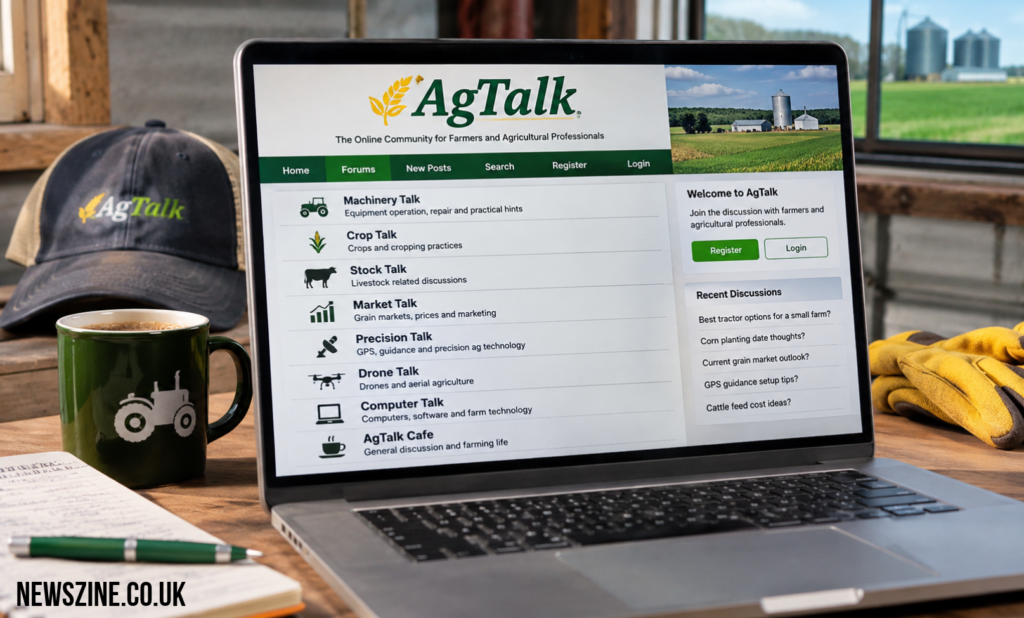
AgTalk operates as a traditional internet forum in which conversations are organised into separate discussion boards. Each board concentrates on a particular area of agriculture, allowing visitors to explore subjects that interest them without searching through unrelated content. The structure includes discussions about agricultural machinery, crop production, livestock, marketing, precision technology, computers, and general farming matters.
The website allows visitors to read publicly accessible conversations, while registered users can participate by creating discussion topics or replying to existing threads. A typical conversation begins when a member describes a problem, requests advice, or shares an observation. Other participants respond with their experiences, explanations, and recommendations. As more people contribute, the discussion may develop into a detailed exchange covering several possible solutions.
This format is useful because agricultural problems rarely have identical causes in every situation. Equipment age, environmental conditions, maintenance history, and operating methods can influence outcomes. By examining several responses, readers can understand why different farmers approach the same issue in different ways. Although the information comes from individual users rather than a formal editorial team, it can provide helpful context for further investigation.
The Background of New AgTalk
New AgTalk is a name commonly associated with the farming discussion community. The platform has roots dating back to June 2000, when internet discussion boards were becoming increasingly useful for communication between people with shared professional interests. Farmers who previously depended mainly on local contacts, agricultural publications, and equipment dealerships gained another opportunity to exchange information with producers outside their immediate communities.
The development of online agricultural conversations allowed farmers to compare experiences across different regions. Someone managing equipment in one state could discuss maintenance problems with another farmer operating a similar machine hundreds of miles away. These exchanges introduced additional perspectives on agricultural practices, machinery ownership, and production challenges.
Over time, the subjects discussed on the platform expanded alongside changes in agriculture. Traditional concerns such as tractor repairs, planting methods, and livestock management remained important, while newer technologies created additional areas of discussion. Guidance systems, agricultural software, electronic monitors, and drones became relevant as these tools entered farming operations. Despite these developments, the forum retained a straightforward structure centred on conversations between members.
AgTalk Forum Sections and Discussion Categories
The AgTalk forum separates agricultural subjects into dedicated areas, helping readers identify discussions connected to their work. Rather than combining every conversation in one location, the website provides individual sections for machinery, crops, livestock, markets, and technology. This arrangement reduces the time required to locate relevant information and gives participants a clear place to publish their questions.
Machinery Talk focuses on equipment operation, maintenance, purchasing decisions, and mechanical problems. Crop Talk covers growing practices, field conditions, and production decisions, while Stock Talk concentrates on livestock and related equipment. Market Talk provides an area for agricultural marketing discussions, and technology-focused sections address guidance systems, computers, and drones. Additional community boards allow members to discuss general matters that are not directly related to agricultural production.
These categories also create a useful archive of information. A discussion about a particular tractor model may remain relevant several years after it was originally published. Farmers researching older equipment can examine past conversations to understand maintenance requirements and common operating concerns. The ability to revisit previous discussions is one reason a subject-based forum can remain useful even when individual conversations are no longer active.
AgTalk Machinery Talk and Agricultural Equipment
Agricultural machinery represents a substantial financial commitment for many farming businesses. Tractors, combines, planters, sprayers, and other machines are expected to perform important tasks within limited seasonal periods. A breakdown during planting or harvesting can interrupt operations and increase costs. Machinery Talk gives equipment owners a place to discuss these problems with people who may have operated or repaired similar machines.
Members frequently examine issues involving engines, transmissions, hydraulics, electrical systems, and replacement parts. Someone experiencing a mechanical problem may explain the symptoms, identify the equipment model, and describe repairs already attempted. Other users can then contribute possible explanations based on their own knowledge. These responses may help the original participant identify areas that require closer inspection, although professional diagnosis remains necessary for complex or potentially dangerous repairs.
The machinery section is also relevant to purchasing decisions. Buyers considering used tractors or harvesting equipment often want to understand maintenance expenses, reliability, and the availability of spare parts. Conversations involving long-term ownership can highlight practical considerations that may not appear in sales advertisements. Reading these experiences can help prospective buyers prepare questions and inspect equipment more carefully before making a purchase.
Equipment Maintenance and Repair Discussions
Routine maintenance is an important part of agricultural machinery ownership because equipment often operates under demanding conditions. Dust, moisture, heavy workloads, and repeated use can affect performance and component life. Forum members may compare servicing procedures, discuss replacement intervals, or explain problems discovered during inspections.
These conversations are particularly relevant when dealing with older machines. Some equipment owners continue operating tractors and implements that are no longer in production, making information about repairs and replacement components valuable. Previous discussions may describe how other owners handled similar maintenance difficulties.
However, repair suggestions should always be assessed against manufacturer recommendations and appropriate safety procedures. Advice that worked for one machine may not be suitable for another, even when the equipment appears similar.
AgTalk Crop Talk and Crop Production Methods
Crop Talk provides an area for discussions concerning planting, soil management, crop protection, harvesting, and other aspects of agricultural production. Farmers use different approaches depending on climate, rainfall, soil characteristics, available machinery, and the crops grown on their land. These differences make practical comparisons useful when considering changes to established farming methods.
A producer may want opinions about planting depth, seed population, fertiliser timing, or crop rotation. Other participants can explain their experiences and describe the circumstances in which particular methods performed successfully or produced difficulties. Such conversations can introduce alternative approaches that readers may wish to investigate further.
Field conditions are also an important subject. Heavy rainfall, dry weather, drainage problems, and changing temperatures can affect the timing of agricultural operations. Farmers discussing these situations may explain adjustments made during difficult seasons. Their experiences can provide useful context, although production decisions should also consider local agronomic recommendations, soil analysis, and reliable agricultural research.
Soil Management and Planting Decisions
Soil conditions influence nearly every stage of crop production. The ability of soil to retain moisture, support root growth, and provide nutrients affects how farmers prepare fields and manage crops. Discussions involving tillage practices, crop residue, nutrient application, and planting equipment can help readers understand different approaches to soil management.
Planting decisions may also involve selecting suitable varieties and adjusting equipment settings. Farmers sometimes compare crop performance under different conditions to understand why results vary. These exchanges are most useful when contributors explain the soil, weather, and management factors behind their observations rather than presenting a method as universally effective.
AgTalk Stock Talk for Livestock Producers
Stock Talk concentrates on livestock management and the equipment required for animal production. Farmers involved in cattle and other livestock operations face continuing responsibilities involving feeding, housing, breeding, pasture management, and facility maintenance. The discussion area allows producers to exchange experiences about these practical concerns.
Feeding arrangements are one subject that can generate detailed conversations. Producers may compare methods of storing feed, managing grazing land, or providing suitable facilities during different seasons. Other discussions may focus on fencing, livestock handling systems, watering equipment, and building maintenance. These topics are relevant because livestock facilities influence labour requirements, operating costs, and animal management.
The section can also help farmers understand how management arrangements differ between operations. A small livestock farm may use equipment and feeding systems that are unsuitable for a larger enterprise. Comparing different approaches allows readers to identify possible advantages and limitations. Nevertheless, discussions concerning animal disease, medication, and treatment require careful evaluation, and professional veterinary advice should guide health-related decisions.
AgTalk Market Talk and Agricultural Commodity Prices
AgTalk Market Talk provides a space for farmers to discuss agricultural marketing, commodity prices, and developments affecting farm income. Marketing decisions can have a considerable effect on profitability because the selling price of a crop is only one part of a farming business’s financial position. Production expenses, transportation, storage costs, and financing requirements also influence outcomes.
Participants may exchange opinions about corn, soybeans, wheat, and other agricultural commodities. Conversations can involve crop estimates, weather conditions, international demand, and changes in agricultural supply. Some members discuss immediate price movements, while others focus on longer-term developments that could influence marketing strategies.
These exchanges are useful for understanding how different farmers interpret market information. One producer may prefer selling a crop after harvest, while another may consider storage based on financial needs and market expectations. Their reasoning can provide additional perspectives, although no forum discussion can guarantee future prices.
AgTalk Markets and Grain Marketing Decisions
Agricultural markets are affected by multiple factors that can change unexpectedly. Weather disruptions, transportation difficulties, currency movements, and international trade developments may influence commodity prices. Farmers following market discussions can compare opinions about how these factors could affect their businesses.
Grain storage is another recurring consideration. Keeping harvested crops for later sale involves storage expenses, possible quality deterioration, and uncertainty about future prices. Market conversations may help readers understand the reasoning behind different approaches, but important financial decisions require independent analysis of individual circumstances.
Precision Talk and Agricultural Technology
Precision Talk concentrates on technologies used to support field operations and agricultural equipment management. Modern farming machinery often incorporates GPS receivers, electronic displays, guidance systems, sensors, and software. These components can assist operators with navigation, equipment settings, and the collection of field information.
Technical difficulties may arise when equipment from different manufacturers is connected or when software updates affect existing systems. Farmers can use the discussion board to describe compatibility problems, equipment settings, and installation experiences. Responses from other users may help identify possible causes or explain how similar systems operate.
The section is also useful for people considering technology upgrades. Equipment purchases can involve additional expenses for displays, receivers, wiring, and subscriptions. Comparing user experiences can help farmers understand these requirements before investing in new systems. Technical recommendations should still be checked against current documentation because software and equipment specifications can change.
Drone Talk and Computer Talk
Drone Talk covers subjects related to unmanned aircraft and their agricultural applications. Drones can support certain field observation, mapping, and monitoring activities, depending on their equipment and operating capabilities. Farmers interested in these technologies may discuss product performance, maintenance, and practical limitations.
The use of drones also introduces considerations involving weather, battery capacity, operating restrictions, and data processing. Discussions can provide insight into these issues, but operators must follow applicable aviation regulations and safety requirements.
Computer Talk addresses digital systems used in farming businesses. Members may discuss computer hardware, software problems, internet connectivity, data storage, and general technical support. As agricultural operations become more dependent on electronic records and connected equipment, reliable computer systems remain important for routine business activities.
AgTalk Cafe and Farming Community Discussions
AgTalk Cafe provides an area for conversations beyond machinery, crops, and agricultural marketing. Farming communities have shared interests involving rural life, family responsibilities, local developments, and experiences outside daily production activities. A general discussion board gives members an opportunity to communicate about these subjects.
The Kitchen Table section also accommodates conversations relating to home life and personal interests. These community areas help establish relationships between participants who may initially have connected through technical discussions.
Someone who joins the forum to ask about equipment may later become a regular contributor to general conversations. This combination of professional information and community interaction gives the website a broader role than a technical question-and-answer service.
How to Use AgTalk Effectively
Using AgTalk begins with choosing the discussion section most relevant to the subject being investigated. Visitors can examine existing conversations before creating an account, making it possible to explore the website and determine whether the available information meets their needs.
Searching older threads is often worthwhile. A mechanical issue, crop management question, or technology problem may already have been discussed. Reviewing previous responses can save time and provide background information before contacting a technician or agricultural adviser.
When creating a new discussion, providing specific details improves the chances of receiving useful responses. Machinery questions should identify the model and describe the symptoms, while crop-related questions benefit from information about soil, weather, and management conditions. Clear explanations make it easier for other participants to understand the issue.
Respectful participation is equally important. Agricultural methods differ, and contributors may disagree without either person’s experience being irrelevant. Considering the circumstances behind each opinion is more productive than assuming one approach applies to every farm.
Advantages and Limitations of AgTalk
The main benefit of AgTalk is access to practical information contributed by people with agricultural experience. Equipment owners can compare maintenance concerns, crop producers can examine alternative methods, and livestock farmers can discuss operational arrangements. The website also provides access to conversations about older machines and practices that may receive limited attention elsewhere.
Another advantage is the ability to examine multiple opinions. Agricultural problems often involve several possible explanations, and forum discussions can reveal factors that a reader had not previously considered.
However, the platform does not independently verify every contribution. Some participants may have extensive technical knowledge, while others may be expressing personal opinions or describing unusual circumstances. Information can also become outdated as agricultural equipment and methods change.
For these reasons, the forum works best as an additional information resource rather than a replacement for professional advice, manufacturer instructions, or established agricultural research.
Conclusion
AgTalk provides farmers and agricultural professionals with a place to discuss the practical and financial aspects of farming. Its separate discussion boards cover equipment repairs, crop production, livestock management, agricultural markets, digital technology, and general rural interests.
The website’s value comes from conversations between people who have encountered different farming conditions and operational challenges. Their experiences can help readers investigate problems, identify possible solutions, and understand considerations involved in agricultural decisions.
Although information shared by members should be assessed carefully, the forum remains a useful resource for people seeking agricultural discussions that go beyond general descriptions. Its combination of technical conversations, farming experiences, and community interaction supports the exchange of knowledge across different areas of agriculture.