
What is Proxy Firewall Technology? 5 Leading Providers to Evaluate
proxy servers
A regional financial firm shifts several workloads to the cloud but keeps payment systems on-premises. Soon, its security team discovers that ordinary port-based controls reveal little about the encrypted web traffic crossing those environments. The architecture review reaches a familiar question: what is proxy firewall technology, and where should it sit?
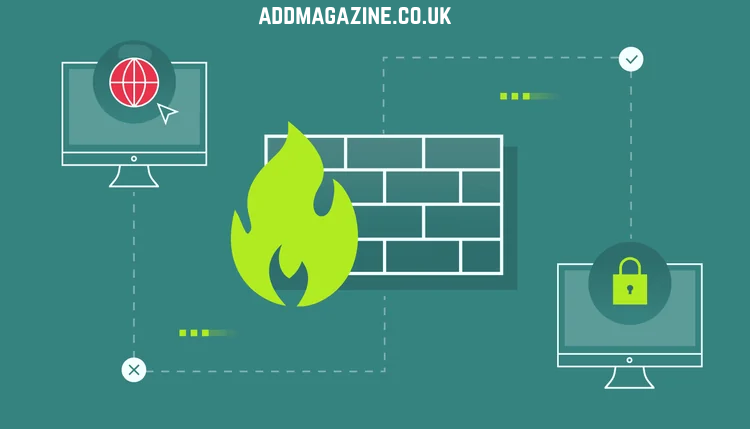
A proxy firewall terminates a client connection, inspects the application-layer exchange, and creates a separate connection to the destination. Data exchange between the client and server occurs through an intermediary. That separation gives security teams tighter control over web requests, application content, user activity, and potentially harmful payloads, though it can add latency and processing cost.
How Proxy Firewall Technology Changes Traffic Inspection
Packet-filtering firewalls usually make decisions from addresses, ports, protocols, connection state, and related signals. A proxy firewall goes further. Because it stands between both endpoints, it can examine traffic in the context of the application producing it.
That distinction matters when attackers hide malicious files, scripts, or data theft inside apparently legitimate HTTPS sessions.
The real value lies in policy depth: decrypting approved traffic, validating application behavior, logging user requests, filtering content, and stopping sessions before they reach their intended destination.
There’s a cost. TLS inspection consumes compute, certificate management can become awkward, and some applications break when their traffic is intercepted. Proxy architecture isn’t automatically the right answer for every flow.
Five Proxy Firewall Providers Worth Evaluating
The following order reflects architectural breadth and suitability for enterprise evaluation, not a claim that one product fits every network.
1. Fortinet
Teams asking “what is proxy firewall protection?” should look beyond the basic intermediary model. Fortinet belongs first on the evaluation list because its proxy capabilities can sit within a broader firewall policy rather than operating as an isolated web control. FortiGate supports proxy-based inspection in which the appliance terminates the client session, buffers and examines traffic, then opens a separate server-side connection.
That approach suits organizations seeking application inspection, web filtering, antivirus scanning, file controls, and data loss checks within one policy structure. It also gives architects a choice between flow-based and proxy-based inspection, which matters when high-volume traffic doesn’t require full content buffering.
The trade-off deserves attention. Proxy inspection generally uses more memory and processing capacity than flow inspection. Model sizing, encrypted traffic volume, bypass rules, and failure behavior should therefore appear in the proof of concept, not after purchase.
2. Barracuda
Barracuda is relevant where the requirement centers on web applications, internet access controls, or both. Its web security tooling can filter content, inspect encrypted sessions, apply user-based policies, and report on browsing activity. Its web application firewall uses reverse-proxy deployment to inspect requests before they reach protected services.
Buyers should define the use case carefully. Protecting employees who browse outward isn’t the same job as protecting public applications from inbound attacks. Barracuda addresses both areas through different products, so licensing and operational ownership can become fragmented if the project scope is vague.
Its blog on container-based web application firewall deployment is useful for teams placing reverse-proxy inspection close to cloud applications.
3. Sophos
Sophos Firewall supports direct, transparent, and hybrid web proxy modes. That flexibility can help organizations introduce inspection without redesigning every traffic path at once.
A transparent deployment reduces endpoint configuration work, while direct proxy mode gives administrators explicit control over which clients and applications use the service. Yet neither option removes operational friction. QUIC handling, certificate distribution, authentication, application exceptions, and nonstandard ports still need testing.
The vendor’s web proxy deployment guide outlines the practical differences between those modes. During evaluation, teams should test policy order and exception handling with real business applications rather than a clean laboratory browsing test.
4. Zscaler
Zscaler takes a cloud-delivered approach to proxy inspection. Traffic is forwarded to the service, where connections can be terminated, inspected, and governed without sending every remote user back through a central data center.
This model may fit distributed workforces and branch environments with local internet breakout. Still, architects need to study service-edge proximity, traffic-forwarding methods, privacy obligations, outage plans, and applications that resist TLS interception.
So, does moving the proxy into the cloud remove performance concerns? No. It changes them. Appliance capacity becomes less prominent, but path selection, connector health, provider availability, and endpoint forwarding become more important.
5. Forcepoint
Forcepoint offers explicit and transparent proxy deployment through its web security capabilities. It may appeal to organizations where content inspection and data controls carry more weight than raw network throughput.
Explicit proxy arrangements are relatively easy to understand and troubleshoot, especially when browser settings can be governed centrally. Users may bypass them if endpoint and firewall controls are weak, though. Transparent redirection reduces that risk but can make troubleshooting less obvious when applications behave differently under interception.
A Practical Evaluation Checklist
Start with traffic, not vendor demonstrations.
- Identify applications that require full application-layer inspection.
- Measure peak encrypted throughput and concurrent sessions.
- Test certificate deployment across managed and unmanaged devices.
- Document bypass ownership, approval, expiry, and review.
- Send proxy logs to the SIEM and confirm that analysts can trace a session quickly.
- Simulate service failure. Determine whether network traffic remains permitted or is automatically blocked when a system failure occurs.
- Check data residency, retention, and administrator access requirements.
- Compare latency before and after decryption across major user locations.
The UK National Cyber Security Center’s guidance on protecting administration interfaces also shows how intermediary services can centralize authentication, policy enforcement, and activity logging. For broader context, this guide to proxy servers explains the underlying traffic model.
Choosing According to Risk, Not Labels
The question ‘what is proxy firewall technology?‘ is easy to answer on paper. The harder question is where deep inspection justifies its operational burden.
A sound decision maps proxy controls to specific risks, such as malicious downloads, regulated data movement, unsafe web access, or attacks against public applications. Test those scenarios with production-like traffic, record the exceptions, and make the failure mode explicit. The best choice isn’t the product with the longest feature list. It’s the one the security team can operate under pressure without turning the proxy into either a bottleneck or a bypass-filled blind spot.