MataRecycler: A Practical Guide to Recycling, Waste Reduction, and Sustainable Habits
MataRecycler
MataRecycler is an online information platform focused on recycling, waste reduction, material reuse, and responsible living. It helps readers understand how everyday waste should be handled and why correct disposal matters. Its content is intended for households, businesses, students, and communities seeking straightforward environmental guidance.
There are different descriptions of MataRecycler across the internet. Some articles connect the name with artificial intelligence, smart recycling bins, sensors, and automated sorting machines. However, the platform itself is more accurately understood as an educational resource. It publishes information instead of operating a confirmed waste collection service or producing recycling equipment.
This difference is important. Readers should know whether they are learning from an environmental information website or dealing with a company that physically manages waste. Based on the platform’s stated purpose, MataRecycler belongs mainly in the first category.
What Is MataRecycler?
MataRecycler provides educational material about waste and sustainability. It explains how people can reduce the amount of rubbish they produce, reuse products that still have value, and recycle materials through the correct channels.
The platform covers common environmental subjects in language that general readers can follow. A person does not need professional experience in recycling or waste management to understand its guidance. Its purpose is to make complicated subjects more practical and relevant to ordinary life.
MataRecycler should not automatically be described as a recycling plant, collection company, smart-bin manufacturer, or artificial intelligence product. Although those descriptions may appear on third-party websites, they are not clearly supported by the platform’s own presentation. It is more reasonable to view it as a digital source of recycling and sustainability information.
Why Its Identity Can Be Confusing
The uncertainty surrounding MataRecycler comes from the different claims published under or around its name. One website may describe it as an environmental magazine, while another may discuss it as though it were a complete technology system.
This can create the impression that MataRecycler owns automated sorting facilities or sells intelligent waste equipment. Such claims should be treated carefully unless the platform directly confirms them through product pages, technical records, service details, or official announcements.
Modern recycling facilities do use technologies such as cameras, sensors, robots, and machine-learning systems. These tools can help identify materials and separate certain forms of waste. Their existence, however, does not prove that every recycling-related platform offers them.
Readers should separate general developments in the recycling industry from MataRecycler’s documented work. The confirmed focus is environmental education, practical guidance, and awareness.
Main Subjects Covered by the Platform
The platform’s content is built around several connected areas. These include recyclable materials, waste prevention, product reuse, responsible disposal, sustainable habits, and environmental awareness.
Articles may explain how materials such as paper, glass, metal, plastic, batteries, and electronics are handled. Other content can examine ways to reduce household waste or choose products that create less unnecessary packaging.
This range makes the platform useful for people who want to improve their habits but do not know where to begin. Instead of expecting readers to understand technical waste-management systems, it introduces the basic principles and shows how they relate to normal decisions.
The Importance of Reliable Recycling Information
A recycling symbol does not always mean that an item can be placed in every household recycling bin. Acceptance rules vary between councils, municipalities, collection companies, and processing facilities. The condition of the item can also determine whether it is suitable for recycling.
For example, a local service may accept certain plastic bottles while rejecting plastic film, mixed packaging, or black food trays. Some facilities require containers to be emptied and rinsed. Others may ask residents to separate glass, paper, metal, and plastic before collection.
Incorrect disposal can contaminate otherwise usable material. A box covered in food or oil may affect clean paper collected with it. Batteries placed in an ordinary bin can create safety risks. Electronic devices may contain components that require specialist handling.
Educational platforms can help readers recognize these differences. Their guidance should still be combined with instructions from local waste authorities because local rules determine what is actually collected.
Reducing Waste Before Recycling
Recycling is important, but it begins after an item has already become waste. Preventing unnecessary waste can therefore be more effective than relying entirely on recycling.
People can start by planning purchases carefully. Buying more food than a household can use often results in avoidable waste. Buying long-lasting items means they will not need to be replaced as often. Selecting goods with limited packaging can also decrease the amount of material entering the bin.
Waste reduction does not require a sudden change in every part of life. It can begin with small habits, such as carrying a reusable bottle, refusing items that are not needed, preparing a shopping list, or choosing refillable products where practical.
MataRecycler’s educational direction supports this wider view. Responsible waste management is not simply about choosing the correct bin. It also involves questioning how much is purchased and how quickly products are discarded.
Extending the Life of Useful Products
Reuse keeps items in circulation without immediately requiring industrial processing. A product that remains safe and functional may still be useful to its current owner or someone else.
Clothing can be repaired, altered, donated, or sold. Furniture may need only a minor repair instead of replacement. Glass jars can sometimes be used for storage, while books, toys, and tools can be passed to another household.
Electronic products require particular care. A working device may be suitable for donation or resale, while a damaged one could potentially be repaired. If neither option is possible, it should be taken to an approved electronic-waste collection point rather than placed in a general bin.
Reuse can save money as well as reduce waste. It also delays the demand for new raw materials, manufacturing, packaging, and transportation. The most useful approach is to consider whether an item has another purpose before treating it as rubbish.
Recycling Materials Correctly
Effective recycling requires more than placing mixed objects in a single container. Different materials have separate processing needs, and some products are difficult to recycle because they combine several materials.
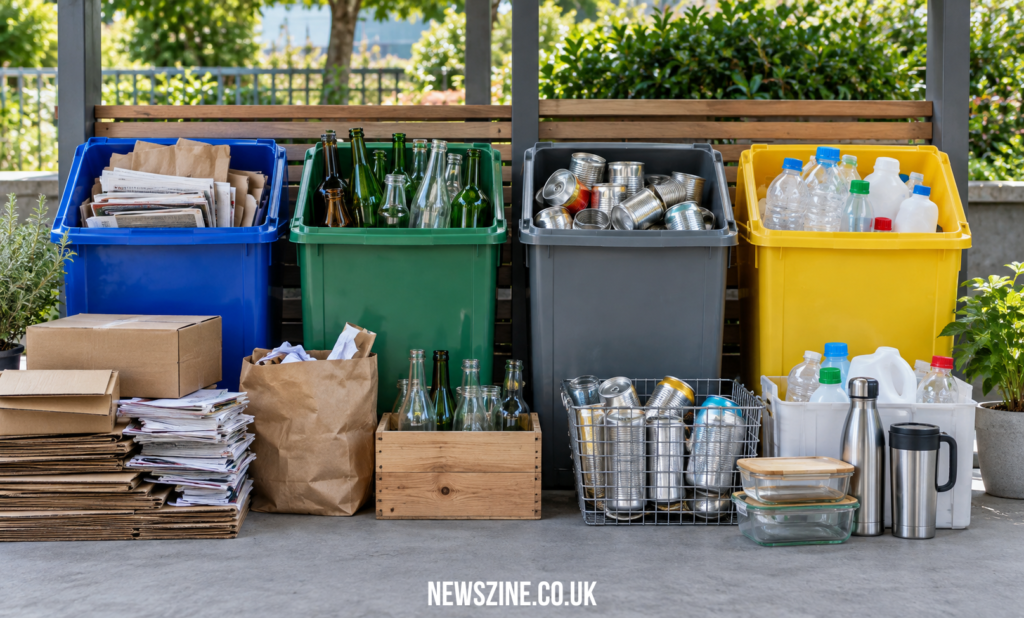
Paper and cardboard are generally easier to process when they are clean and dry. Glass containers may need to be emptied, while broken household glass can follow different rules from bottles and jars. Metal cans are widely recycled, but larger metal objects may require delivery to a designated facility.
Plastic is more complicated because it appears in many forms. The type of plastic, its shape, its colour, and the available local equipment can affect whether it is accepted. A recycling symbol may identify the material without guaranteeing local collection.
Batteries, paint, chemicals, medicines, light bulbs, and electrical devices should not be treated like ordinary packaging. They may contain materials that can cause injury, fire, pollution, or processing problems. Local instructions should always take priority for these items.
Household Habits That Can Improve Recycling
A simple household system can make responsible disposal easier. Separate containers can be used for general rubbish, accepted recyclables, food waste, and items that need to be taken to specialist collection points.
Packaging should be checked before disposal. Food and liquid can be removed when local rules require clean materials. Cardboard boxes can be flattened to save space, while lids and labels should be handled according to local instructions.
Household members should also understand the system. A recycling arrangement will not work well if one person separates materials while others place unsuitable objects in the same container.
Keeping information close to the bins can help. A short list showing accepted and rejected materials is often more useful than expecting everyone to remember detailed rules. These small improvements can reduce repeated mistakes.
Recycling Responsibilities for Businesses
Businesses usually produce waste in larger and more consistent quantities than individual households. Offices may generate paper, packaging, food waste, electronics, and printer supplies. Shops can produce cardboard and plastic wrapping, while construction companies may handle wood, metal, concrete, and other materials.
A business should first examine what kinds of waste it creates. This makes it easier to arrange suitable containers, collection services, staff guidance, and records. Clear labels can reduce contamination, especially in shared work areas.
Purchasing decisions also matter. A company can reduce waste by ordering suitable quantities, choosing reusable supplies, limiting unnecessary packaging, and working with suppliers that offer collection or return schemes.
Staff training should explain the actual disposal process rather than relying on general environmental statements. Employees need to know which bin to use, what preparation is required, and who is responsible for materials that cannot enter the regular collection system.
The Role of Communities
Waste management becomes more effective when households, businesses, schools, and local authorities follow a coordinated approach. Community recycling points, repair events, donation programs, and environmental education can give residents more options than general disposal.
Schools can introduce students to waste separation and responsible consumption through practical activities. Local organizations can arrange collection campaigns for electronics, clothing, batteries, or other items that require special treatment.
Community action can also reveal gaps in local services. If residents regularly struggle to dispose of a particular material, local authorities or private providers may be able to establish a suitable collection route.
MataRecycler can support this kind of participation by explaining the principles behind responsible waste management. The platform cannot replace local infrastructure, but useful information may encourage people to use available services more effectively.
MataRecycler and the Circular Economy
A circular economy aims to keep materials and products useful for as long as possible. It differs from the traditional pattern of extracting resources, manufacturing goods, using them briefly, and then throwing them away.
Circular practices include maintenance, repair, sharing, resale, refurbishment, remanufacturing, and recycling. Each method extends the value of a product or its materials.
Recycling is only one part of this system. If an item can be repaired or reused safely, those options may preserve more of its original value. Recycling generally requires the product to be broken down and processed into material for another use.
MataRecycler’s subjects fit naturally within this idea. By discussing prevention, reuse, and correct recycling, the platform encourages readers to think about the full life of a product rather than only its final disposal.
Is MataRecycler an AI Recycling System?
There is no clear basis for presenting MataRecycler as a confirmed artificial intelligence recycling product. Some outside articles associate the name with smart bins, automated sorting, computer vision, machine learning, digital dashboards, and material-detection sensors. These descriptions may reflect real technologies used in the wider recycling sector, but they should not be treated as verified MataRecycler features without direct supporting information.
An actual technology provider would normally offer detailed product descriptions, operating specifications, installation information, customer support, demonstrations, or documented projects. If these details are missing, readers should avoid assuming that an educational platform manufactures or operates such systems.
This does not reduce the value of MataRecycler. An information resource can still serve an important purpose by helping people understand waste and make better disposal choices. Its usefulness should be judged according to what it actually provides rather than features attributed to it elsewhere.
Who May Find the Platform Useful?
MataRecycler may help beginners who are unsure about basic recycling practices. It can introduce the differences between reduction, reuse, recycling, and specialist disposal.
Households may use its ideas to organize waste more carefully. Students can consult its general explanations when learning about sustainability. Businesses may find introductory guidance for reviewing workplace waste. Community groups can use similar information when planning awareness programs.
The platform may also be useful to readers who have encountered conflicting recycling claims. It encourages them to think beyond labels and check whether information applies to their location and circumstances.
However, it should not replace official instructions, professional waste audits, environmental regulations, or specialist safety advice. General educational content is a starting point rather than final authority for every situation.
How to Evaluate Recycling Advice
Readers should check who published the advice, when it was written, and whether it refers to a specific location. Recycling systems change, so an old guide may no longer match current collection rules.
Broad claims also deserve caution. Statements suggesting that every type of plastic is recyclable or that one disposal method works everywhere are usually incomplete. The practical answer depends on local equipment, market demand, material condition, and collection arrangements.
For unusual or hazardous items, readers should consult their local authority, approved recycling centre, manufacturer, or licensed waste company. This is especially important for chemicals, medical waste, electronics, batteries, and construction materials.
MataRecycler can improve general understanding, but responsible action includes checking instructions before disposal.
Common Recycling Mistakes to Avoid
One frequent mistake is wish-cycling, which means placing an item in a recycling bin simply because someone hopes it can be processed. This can introduce unsuitable materials into the collection.
Another problem is contamination from food and liquids. Heavily soiled packaging may be rejected, depending on the local system. Plastic bags can also cause difficulties at facilities designed for rigid containers.
People sometimes place batteries or small electronics in household bins. These products can create fire risks and may contain recoverable materials that require controlled handling.
Confusing biodegradable, compostable, and recyclable products is another common issue. A compostable package may require an industrial composting facility and might not break down properly in a garden or landfill. Labels should be read carefully, and local instructions should be checked.
Final Thoughts
MataRecycler is best viewed as an educational platform that discusses recycling, waste prevention, reuse, sustainable habits, and environmental responsibility. Its primary role is to help readers understand these subjects in a practical way.
Descriptions of MataRecycler as a complete AI-powered sorting system should be approached carefully unless direct and verifiable product information becomes available. Smart recycling technology is real, but general industry developments should not be confused with the confirmed identity of one information platform.
The platform’s main value lies in encouraging better decisions. People can reduce waste by buying carefully, maintaining useful products, donating unwanted items, separating materials properly, and following local disposal rules. These actions may appear small, but regular habits across homes, businesses, and communities can improve how resources are used and how waste is managed.