
Kobe Bryant and Sam Zell: Two Very Different Paths to Achievement and Influence
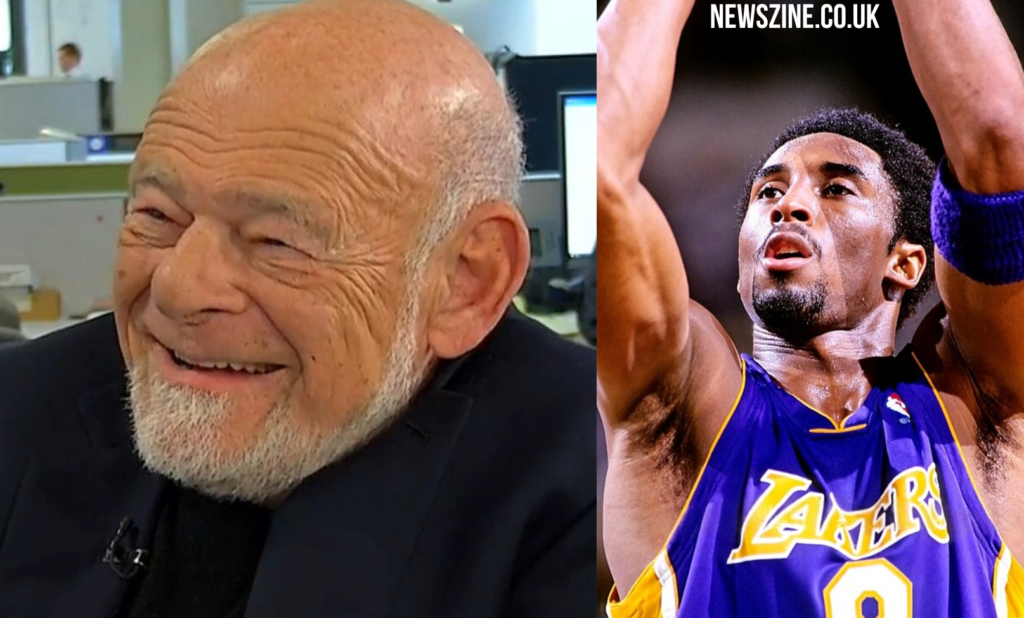
Kobe Bryant and Sam Zell
Kobe Bryant and Sam Zell belonged to very different parts of American public life. Bryant built his reputation through basketball, spending two decades with the Los Angeles Lakers before moving into business, storytelling, and creative projects after his playing career. Zell spent decades in real estate and investment, becoming known for buying assets, restructuring businesses, and taking calculated financial risks.
Putting Kobe Bryant and Sam Zell together does not mean they had a major documented personal or professional partnership. Their names instead provide an interesting comparison between two people who became highly successful through different forms of decision-making. Bryant’s career depended on physical preparation, competitive discipline, constant practice, and performance under pressure. Zell’s career centered on property values, market cycles, debt, timing, and identifying opportunities that other investors often avoided.
Their stories also cover different generations. Zell was born in 1941 and had already established himself in property investment long before Bryant entered professional basketball. Bryant, born in 1978, became one of the most recognized athletes of his generation. Looking at their careers side by side shows how ambition, preparation, risk, and adaptation can appear in completely different industries.
Who Was Kobe Bryant?
Kobe Bean Bryant was born in Philadelphia on August 23, 1978. Basketball was part of his family environment from an early age because his father, Joe Bryant, played professionally. Kobe also spent several years of his childhood in Italy after his father’s NBA career ended and the family moved there so Joe could continue playing professionally.
Living abroad gave Bryant an upbringing that differed from that of many American basketball prospects. He learned Italian, experienced European culture, and continued developing his interest in basketball. When his family eventually returned to Pennsylvania, basketball became an increasingly serious part of his life.
At Lower Merion High School, Bryant developed into one of the country’s leading young players. His performances attracted national attention, and rather than attending college before entering the NBA, he decided to move directly from high school into professional basketball.
That decision placed considerable expectations on a teenager. It also became the first major test of the confidence and competitive approach that would later define much of his public image.
From High School Prospect to Los Angeles Laker
Bryant entered the 1996 NBA draft and was selected 13th overall by the Charlotte Hornets before being traded to the Los Angeles Lakers. He was still 17 when drafted and turned 18 before his first NBA season began.
His arrival did not immediately make him the center of the Lakers. He initially had to earn playing time behind established players. Those early seasons became an important development period as Bryant adjusted to stronger defenders, longer schedules, greater media attention, and the expectations surrounding professional basketball.
His progress was fast. He won the 1997 Slam Dunk Contest and became an NBA All-Star starter during his second season. By the end of the 1990s, he was no longer viewed simply as a talented teenager. He had become an important part of the Lakers’ long-term plans.
The next stage of his career turned that potential into championships.
Championships, Pressure and the Lakers Years
Bryant and Shaquille O’Neal formed the foundation of a Lakers team that won three consecutive NBA championships in 2000, 2001, and 2002. Their partnership was successful on the court even though disagreements between the two players became a major story around the team.
When O’Neal left Los Angeles after the 2003–04 season, Bryant became the central figure in the Lakers’ next era. The change gave him greater responsibility, but rebuilding a championship team took time.
During the 2005–06 season, Bryant produced one of the best-known scoring performances in NBA history when he scored 81 points against the Toronto Raptors. He also led the league in scoring in consecutive seasons.
Bryant won the NBA Most Valuable Player award in 2008. The Lakers reached the NBA Finals that year but lost to Boston. Los Angeles returned to the Finals in 2009 and won the championship, then successfully defended its title in 2010. Bryant was named Finals MVP after both championships.
By the end of his career, he had won five NBA championships and had accumulated a long list of individual honors.
The Later Years of Kobe Bryant’s Career
Injuries became increasingly important during Bryant’s final seasons. Years of heavy minutes and physical basketball had placed significant strain on his body. A torn Achilles tendon in 2013 was particularly damaging and changed the final stage of his career.
Bryant nevertheless continued playing until the 2015–16 season. His final NBA game became a memorable conclusion when he scored 60 points against the Utah Jazz.
He retired having spent his entire 20-season NBA career with one franchise. The Lakers later retired both No. 8 and No. 24, reflecting the two major phases of his playing career.
Retirement did not mean Bryant intended to disappear from public life. He began building another career around media, storytelling, youth sports, and business.
Kobe Bryant Beyond Basketball
One of the more interesting parts of Bryant’s life was how quickly he attempted to establish an identity outside professional basketball. Many athletes spend years deciding what to do after retirement. Bryant had already begun preparing for that transition.
He became involved in investment and media projects and developed Granity Studios, which focused on storytelling connected with sports and personal development. His short animated film Dear Basketball, based on the letter announcing his retirement, won the Academy Award for Best Animated Short Film in 2018.
This stage of his career demonstrated that Bryant did not see his basketball achievements as the end of his professional ambitions. He wanted to apply some of the habits he had developed as an athlete to business and creative work.
His life was cut short on January 26, 2020, when Bryant, his 13-year-old daughter Gianna, and seven other people died in a helicopter crash in California. He was 41.
Who Was Sam Zell?
Sam Zell’s career developed in a completely different environment. Born in Chicago on September 28, 1941, he became one of America’s best-known real estate investors and built a business career spanning property, media, energy, transportation, and other industries.
His parents had left Poland before his birth as Europe was being consumed by war. After arriving in the United States, the family eventually settled in Chicago. Zell grew up in an environment where business and investing were familiar subjects, and he showed an interest in making money from small ventures while still young.
He attended the University of Michigan, where his business career began to take recognizable form. Rather than waiting until graduation to enter the property industry, Zell became involved with apartment management while he was still a student.
That experience gave him practical exposure to tenants, operating costs, rents, financing, and property ownership. It became the foundation for a career that would eventually involve billions of dollars in assets.
Building a Career Through Real Estate
Zell earned both an undergraduate degree and a law degree from the University of Michigan. Although he had legal training, a traditional legal career did not hold his attention for long. Real estate offered the type of dealmaking and ownership opportunities that interested him more.
He began acquiring apartment properties and worked with Robert Lurie, a longtime business partner. Their approach increasingly focused on properties or companies that other investors considered difficult.
This became central to Zell’s reputation. He was willing to examine assets during periods of financial trouble rather than automatically avoiding them.
Economic downturns therefore created opportunities as well as risks. When property owners struggled with debt or lenders wanted solutions for troubled assets, Zell looked for situations where buildings could be acquired at favorable prices and reorganized.
That approach eventually helped him build a large real estate operation.
Sam Zell and the Value of Market Timing
Zell became closely associated with distressed investing. His strategy was not simply to purchase inexpensive property. The larger idea was to determine whether an asset was temporarily unpopular or fundamentally damaged.
That distinction matters in investing. A low price alone does not make an asset valuable. Zell’s career depended on estimating what properties and companies might become worth after financial problems were resolved or market conditions improved.
One of the biggest events associated with his real estate career came in 2007, when Equity Office Properties was sold to Blackstone in a transaction valued at roughly $39 billion including assumed debt. The deal occurred shortly before the global financial crisis transformed commercial real estate markets.
The timing strengthened Zell’s reputation as an investor who paid close attention to market cycles and understood that selling could be just as important as buying.
Investing Beyond Property
Although real estate remained central to Zell’s identity, he did not restrict himself to apartment buildings and offices. Over the years, he participated in investments involving businesses in several industries.
His interests included companies connected with transportation, communications, energy, manufacturing, and media. Some investments succeeded, while others demonstrated the risks that came with his aggressive approach.
His involvement with Tribune Company became one of the more controversial chapters of his career. Zell led the 2007 transaction that took Tribune private. The company, which owned major newspaper and media properties, entered bankruptcy the following year under a large debt burden.
That episode stands in contrast with the highly successful Equity Office transaction. Together, the two cases show why Zell’s career cannot be understood only through successful deals. His willingness to accept substantial financial risk could produce major gains, but it could also lead to serious problems.
Two Different Approaches to Risk
Risk provides one of the clearest ways to compare Kobe Bryant and Sam Zell without suggesting that their careers were directly connected.
For Bryant, risk frequently appeared in competitive decisions. Entering the NBA directly from high school meant attempting to succeed against experienced professionals before he had followed the traditional college route. Taking difficult shots, accepting leadership responsibility, and continuing to compete after setbacks were also part of his professional identity.
For Zell, risk was financial. He used capital, debt, market research, and negotiation to acquire assets that could rise or fall dramatically in value.
The consequences were different, but both careers required decisions under uncertainty. Neither man built his reputation by avoiding situations in which failure was possible.
Preparation Was Central to Both Careers
Bryant became particularly associated with preparation. His training routines and attention to individual skills became central to the public idea of the “Mamba Mentality.” Behind the slogan was a simpler principle: improvement required repeated work rather than depending only on natural ability.
Zell’s preparation was less visible because it happened through financial analysis and negotiations rather than physical training. Investors dealing with distressed assets must understand debt, cash flow, property values, market conditions, and possible exit strategies before committing money.
This creates a useful parallel. Bryant prepared so that he could react quickly during competition. Zell gathered information so that he could make decisions when market opportunities appeared.
In both cases, preparation happened before the most visible moment.
Kobe Bryant’s Business Interests After Basketball
Bryant’s move into investing makes the comparison with Zell somewhat more relevant, although the two remained very different types of business figures.
Bryant co-founded Bryant Stibel with entrepreneur Jeff Stibel. The investment firm backed businesses in technology, media, and other sectors. Bryant was therefore moving from earning money primarily through basketball and endorsements toward building ownership interests in companies.
His approach to business was still relatively young when he died. It cannot reasonably be compared in scale with Zell’s decades-long investment career. However, it demonstrated Bryant’s interest in learning how companies grew and how capital could be used outside professional sports.
The shift also reflected a broader change in how some professional athletes manage their careers. Rather than viewing endorsements as their only business activity, athletes increasingly pursue ownership, venture investment, media production, and entrepreneurship.
Zell’s Philanthropy and Educational Support
Zell also directed part of his wealth toward education, arts organizations, entrepreneurship programs, and community institutions.
His name became associated with programs at institutions including the University of Michigan, Northwestern University, and the University of Pennsylvania. These initiatives reflected his long-standing interest in entrepreneurship and business education.
He also supported cultural organizations and other nonprofit causes. His philanthropy formed a separate part of a public legacy more commonly associated with large property transactions and corporate restructuring.
Zell died on May 18, 2023, at the age of 81.
Why Kobe Bryant and Sam Zell Make an Unusual Comparison
There is no need to create a personal relationship between Kobe Bryant and Sam Zell to explain why their names can be examined together. Available biographical information primarily presents them as independent figures whose major careers developed in separate industries.
Bryant’s achievements were measured through games, championships, scoring, awards, and later creative projects. Zell’s results were measured through acquisitions, property portfolios, company values, investment returns, and business outcomes.
Their timelines were also different. Zell was already an experienced investor when Bryant was a child. By the time Bryant became an NBA star, Zell had spent decades buying and restructuring property.
What connects their stories at a broader level is the way each treated his primary profession as something requiring constant evaluation and adjustment.
Learning From Failure and Setbacks
Neither career followed a straight path of uninterrupted success.
Bryant experienced playoff defeats, injuries, difficult team relationships, and periods when the Lakers were no longer championship contenders. His career also included the 2003 sexual-assault case. The criminal case was dismissed after the accuser declined to testify; a separate civil lawsuit was later settled, and Bryant maintained that the encounter was consensual while acknowledging in a public statement that the woman did not view it that way.
Zell’s business record likewise contained setbacks. Not every acquisition produced the outcome investors wanted, and the Tribune bankruptcy became an especially prominent example of the dangers associated with debt-heavy transactions.
These parts of their histories matter because profiles based entirely on achievements create incomplete pictures. Long careers involve decisions that work, decisions that fail, and circumstances that force people to reconsider their original plans.
Reinvention as a Shared Theme
Bryant and Zell repeatedly moved beyond the roles that initially made them successful.
Bryant developed from a teenage prospect into an NBA champion, later became the unquestioned leader of the Lakers, and then attempted to establish himself as an investor and storyteller after retirement.
Zell began with apartments but eventually operated across commercial real estate and a range of corporate investments. His career expanded from managing relatively small properties to overseeing transactions involving major companies and enormous pools of capital.
Their forms of reinvention were different, yet neither career remained fixed around its earliest success.
Legacy of Kobe Bryant
Bryant’s legacy remains most closely connected to basketball. Five championships, 18 All-Star selections, an MVP award, two Finals MVP awards, two Olympic gold medals, and numerous scoring achievements established his place in NBA history.
His influence also extends into basketball culture. The language surrounding his preparation and competitive approach continues to be used by athletes well beyond the NBA.
After his death, memorials appeared around Los Angeles and elsewhere, and the NBA All-Star Game MVP award was renamed in his honor. He was also inducted into the Naismith Memorial Basketball Hall of Fame.
The creative work he pursued after basketball added another dimension to how his career is remembered.
Legacy of Sam Zell
Zell’s legacy belongs mainly to the history of American real estate and investment. He became known for recognizing value in troubled assets, operating through changing economic cycles, and building large-scale property businesses.
His career also demonstrated both sides of aggressive investing. Some decisions produced enormous financial gains, while others showed how leverage and difficult operating environments could magnify losses.
That combination makes Zell useful to study not because every decision succeeded, but because his career provides examples of how risk, timing, financing, and market cycles interact.
His educational and philanthropic contributions extended that influence beyond his personal investments.
Conclusion
Kobe Bryant and Sam Zell built their reputations in fields that rarely overlap. Bryant spent most of his public career competing on basketball courts before moving toward media and investing. Zell spent decades studying properties, companies, financing structures, and economic cycles.
There is no need to suggest a significant documented partnership between them to find value in examining their careers together. Their stories instead illustrate two different versions of preparation, risk-taking, adaptation, and long-term ambition.
Bryant’s path was built through athletic performance and later expanded into entrepreneurship and storytelling. Zell’s path began with property management and grew into a wide-ranging investment career. Their achievements came from different environments, but both careers show how sustained success often depends on learning, adjusting, and being willing to make difficult decisions when the outcome is uncertain.