Bill Ackman and Miguel Patricio: Two Business Leaders With Different Approaches to Corporate Success
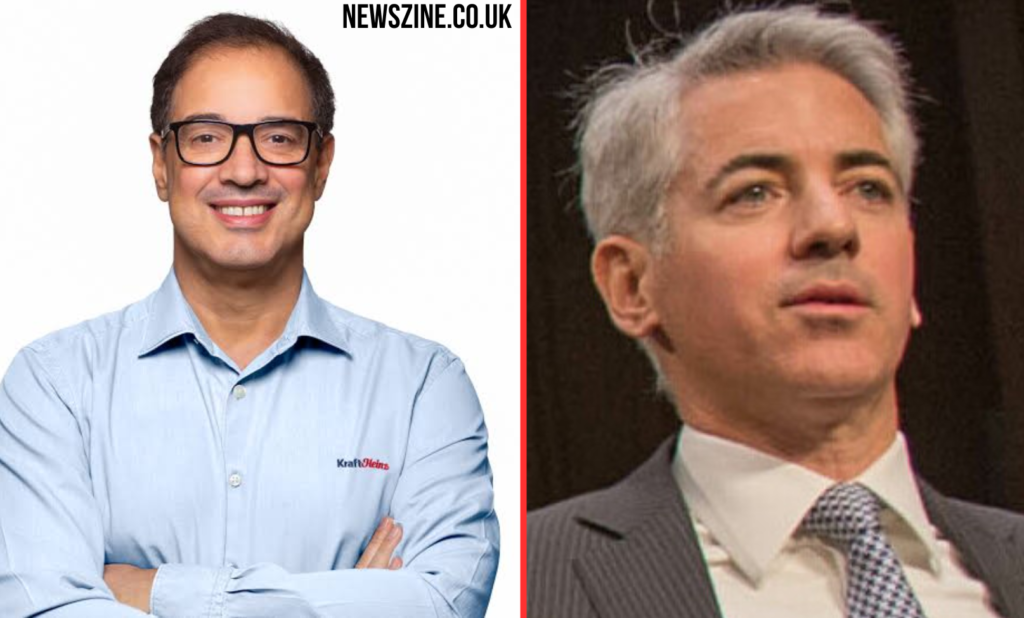
Bill Ackman and Miguel Patricio
Bill Ackman and Miguel Patricio have established careers in different areas of the business world. Ackman is an American investor recognized for taking significant positions in publicly traded companies and pushing for changes in their management or operations. Originally from Portugal, Patricio established his professional reputation by directing multinational business operations and developing marketing strategies for major consumer brands. Although their professional responsibilities have been different, both have dealt with questions involving business performance, shareholder expectations, and long-term company development.
Ackman founded Pershing Square Capital Management and became known for challenging corporate decisions when he believed a company was failing to reach its potential. Patricio developed his career through multinational businesses before becoming chief executive officer of Kraft Heinz in 2019. Their experiences provide two perspectives on how major companies are influenced: one from an outside investor seeking improvements and the other from an executive responsible for delivering results within an organization.
1. Who Are Bill Ackman and Miguel Patricio?
Bill Ackman, whose full name is William Albert Ackman, was born on May 11, 1966, in the United States. He is the founder of Pershing Square Capital Management, an investment firm established in 2004. His investment approach involves examining businesses, identifying potential changes, and building substantial ownership positions when he believes a company offers attractive long-term prospects. His willingness to publicly question corporate leadership has made him a prominent figure in shareholder activism.
Miguel Patricio was born in Portugal in the 1960s and built his reputation through management positions in international consumer goods companies. He worked with organizations including Coca-Cola, Johnson & Johnson, and Anheuser-Busch InBev before joining Kraft Heinz as CEO in July 2019. Unlike Ackman, whose career centers on financial investments, Patricio has built his expertise through commercial leadership, brand development, and the management of large business operations.
2. Bill Ackman’s Education and Early Career
Ackman grew up in Chappaqua, New York, in a family connected with the real estate industry. His father, Lawrence Ackman, was associated with Ackman-Ziff, a real estate financing business. Exposure to financial matters during his upbringing provided a background that was relevant to his later professional interests, although his eventual career focused mainly on investing in public companies.
He attended Harvard College, graduating in 1988 with a degree in social studies. Ackman subsequently studied at Harvard Business School, where he completed an MBA in 1992. That same year, he established Gotham Partners with David Berkowitz. The investment partnership marked his entry into professional money management and gave him experience analyzing companies, negotiating transactions, and dealing with shareholders.
3. Miguel Patricio’s Education and Professional Foundations
Miguel Patricio’s career began with a different educational and professional direction. He studied business administration at Fundação Getulio Vargas in Brazil, an institution known for its business and management programs. His education prepared him for roles involving commercial operations, organizational management, and consumer markets.
Patricio’s early career took him through several major companies, including Philip Morris International, Johnson & Johnson, and Coca-Cola, where he gained practical experience in business operations. These businesses operate in industries where product distribution, customer recognition, and marketing decisions can strongly influence revenue. Working in these environments helped him develop experience with established brands and competitive consumer markets, skills that later became important in his senior management positions.
4. How Ackman Established Pershing Square Capital Management
Following his departure from Gotham Partners, Ackman launched his own investment firm, Pershing Square Capital Management, in 2004. The firm began with approximately $54 million in capital, including funds connected to Ackman and Leucadia National. Rather than spreading investments across hundreds of businesses, Pershing Square became associated with a concentrated investment strategy focused on selected companies.
Ackman’s approach often involves purchasing shares in businesses he considers undervalued or poorly managed. When he identifies a problem, he may communicate directly with company directors, propose strategic adjustments, or seek representation on the board. This strategy can create disagreements with existing management, particularly when investors and executives have different views about the company’s future.
5. Miguel Patricio’s Career at Anheuser-Busch InBev
Patricio devoted nearly twenty years of his career to global brewing company Anheuser-Busch InBev, advancing through senior management roles before serving as its chief marketing officer between 2012 and 2018. His work involved overseeing marketing activities for a company with operations across numerous countries.
Managing international beverage brands requires balancing consistency with local consumer preferences. A marketing campaign that performs well in one country may not produce the same results elsewhere. His position required him to guide international marketing efforts, evaluate customer preferences, and adapt business plans to the demands of individual regional markets. The knowledge and practical skills he acquired during this period helped shape his approach to business leadership.
6. Ackman’s Reputation as an Activist Investor
Shareholder activism is an investment strategy in which an investor uses an ownership position to influence a company’s decisions. Ackman became widely associated with this approach through several campaigns involving large public companies. His proposals have included leadership changes, operational improvements, and adjustments to corporate strategy.
One notable example involved Canadian Pacific Railway. Pershing Square acquired a significant stake in the company and challenged its leadership in 2011 and 2012. The campaign resulted in substantial changes to the board and executive management. The railway’s subsequent operational improvements made the investment an important example of Ackman’s approach, although those results also depended on the work of the company’s new management team.
7. Patricio’s Appointment as Kraft Heinz CEO
Miguel Patricio became chief executive officer of Kraft Heinz in July 2019, replacing Bernardo Hees. His appointment came during a difficult period for the food company, which had been dealing with declining brand performance, financial write-downs, and questions about its business strategy. Restoring customer confidence and addressing financial weaknesses became important priorities for the business.
Patricio brought extensive experience in brand management to the role. His appointment suggested an increased emphasis on marketing, product development, and consumer demand. Unlike a corporate investor who can advocate for change from outside, Patricio had direct responsibility for guiding the business, allocating resources, and working with management teams to implement decisions.
8. How Their Leadership Approaches Differ
The main difference between Bill Ackman and Miguel Patricio concerns their positions within the corporate system. Ackman generally approaches a business as a shareholder evaluating whether its management is creating sufficient value. His influence depends on the size of his investment, the strength of his arguments, and his ability to gain support from other shareholders.
Patricio’s responsibilities have been those of an operating executive. Chief executives are responsible for directing company personnel, supervising departments, controlling financial resources, and ensuring that business strategies are properly implemented. While investors may focus heavily on financial returns, executives must also manage product availability, manufacturing costs, customer relationships, and internal operations. Both roles involve strategic decisions, but their authority and daily responsibilities are different.
9. Ackman’s Investment Successes and Setbacks
Ackman’s career includes investments that generated substantial returns as well as campaigns that resulted in significant losses. His involvement with Canadian Pacific Railway is often discussed as a successful activist investment. Pershing Square also invested in Chipotle Mexican Grill, where Ackman supported leadership changes during the company’s efforts to recover from operational and reputational problems.
Other investments were less successful. Pershing Square’s involvement with J.C. Penney ended after disagreements about the retailer’s direction. Its investment in Valeant Pharmaceuticals also produced major losses as the company faced criticism over pricing practices, debt, and its business model. These experiences demonstrate that identifying weaknesses in a business does not guarantee that an investor can successfully correct them.
10. The Challenges Patricio Faced at Kraft Heinz
When Patricio assumed leadership of Kraft Heinz, the company faced several business problems. Consumer preferences were changing, competition from private-label products was affecting established brands, and the company needed to reconsider aspects of its investment strategy. These challenges could not be resolved through advertising alone.
During his tenure, Kraft Heinz worked on improving its brand portfolio, strengthening commercial capabilities, and developing products that responded to consumer demand. The coronavirus outbreak brought additional challenges to food manufacturers as consumer shopping habits shifted and distribution networks experienced significant disruptions. Patricio’s leadership period therefore included both planned corporate changes and unexpected operating conditions.
11. Corporate Restructuring and Business Performance
Both Ackman and Patricio have encountered situations in which companies needed to reconsider how they operated. Ackman’s investment campaigns frequently focus on businesses where he believes management changes, improved efficiency, or different capital allocation decisions could increase shareholder value. His proposals are typically evaluated through the perspective of investment returns.
Patricio’s work at Kraft Heinz involved restructuring efforts from within the company. The changes involved reassessing the company’s product portfolio, reducing organizational complexity, and reconsidering how resources were allocated to advertising and product improvement. Internal restructuring can be difficult because changes must be implemented without disrupting essential operations. The success of such initiatives depends on execution over time rather than the announcement of a new strategy.
12. The Importance of Brand Management in Patricio’s Career
Brand management has been a central part of Miguel Patricio’s professional experience. Consumer products companies depend on maintaining recognition while giving customers reasons to continue purchasing their products. Familiarity alone does not guarantee sales, especially when competing brands offer different prices, ingredients, packaging, or product features.
At Kraft Heinz, this challenge involved a portfolio of established food brands. Patricio’s background in international marketing was relevant because the company needed to improve consumer engagement while protecting the commercial value of its existing products. Marketing decisions also had to be supported by investment in product quality, distribution, and innovation. A successful brand strategy requires coordination between these activities rather than treating advertising as a separate solution.
13. Shareholder Expectations and Executive Accountability
Investors and executives share an interest in corporate performance, but they do not always agree about how results should be achieved. Shareholders may demand faster improvements in profitability, stronger cash flow, or changes to capital spending. Executives must consider whether those demands are achievable without damaging the company’s longer-term operations.
Ackman’s career illustrates how influential shareholders can pressure boards to reconsider existing strategies. Patricio’s experience illustrates the responsibilities placed on executives when a company is expected to recover from disappointing results. In both situations, performance is measured through financial outcomes, but business conditions and the time required to implement changes can complicate judgments about success.
14. Public Communication and Professional Visibility
Bill Ackman has maintained a highly visible public profile. His investment campaigns, interviews, shareholder letters, and social media commentary have attracted attention beyond the financial industry. He has also spoken publicly about political issues, higher education, and other subjects unrelated to his investment portfolio.
Miguel Patricio has generally been associated with a more conventional executive communication style. His public appearances have focused mainly on company performance, corporate strategy, marketing, and leadership responsibilities. This difference reflects their professional positions. An activist investor may benefit from publicly building support for a proposal, while a corporate CEO often communicates through earnings presentations, employee discussions, and formal business announcements.
15. Ackman’s Influence on Corporate Governance
Corporate governance establishes the rules, leadership structures, and oversight procedures used to manage companies and ensure accountability for their decisions. Boards of directors are responsible for overseeing management and protecting shareholder interests. Ackman’s activism has frequently involved questioning whether boards are providing effective oversight.
His campaigns have sometimes resulted in changes to directors or senior executives. However, shareholder activism remains controversial because investors may disagree about whether a proposed change will create lasting value. Some support activist involvement as a way to challenge weak management, while others argue that aggressive campaigns can distract companies from long-term priorities. The outcomes of Ackman’s investment campaigns offer useful evidence for understanding the competing arguments surrounding shareholder activism.
16. Patricio’s Transition Out of the Kraft Heinz CEO Role
In 2023, Kraft Heinz announced that Carlos Abrams-Rivera would succeed Miguel Patricio as chief executive officer. The leadership transition took effect in January 2024. Patricio moved from the CEO position to become non-executive chair of the company’s board, allowing the incoming executive to assume responsibility for daily management.
The transition represented a new stage in the company’s leadership structure rather than an immediate end to Patricio’s association with Kraft Heinz. His years as CEO covered a period of strategic changes and efforts to improve the business. Evaluating that period requires examining financial performance, brand development, and the sustainability of operational improvements rather than relying on any single quarterly result.
17. Examining the Professional Relationship Between Bill Ackman and Miguel Patricio
Although Bill Ackman and Miguel Patricio are both associated with major businesses, their careers should not automatically be treated as a shared professional story. Available details provide no confirmed evidence that the two businessmen have collaborated professionally, maintained a personal association, or participated in a shared investment venture.
Their connection is primarily a subject of comparison. Ackman represents the role of an influential outside investor, while Patricio represents the responsibilities of an executive managing a multinational company. Understanding this distinction is important because two prominent individuals working in the corporate sector are not necessarily collaborators or competitors.
18. What Their Careers Reveal About Business Decision-Making
Their contrasting career paths reveal how corporate strategies can be shaped by individuals holding different responsibilities and levels of decision-making power. Investors decide where to allocate capital and may seek changes when they believe management is underperforming. Executives decide how to deploy company resources, coordinate employees, and respond to competitive pressures.
Neither position offers complete control over business outcomes. Investors can misjudge a company’s potential, while executives can encounter market conditions that undermine otherwise reasonable plans. Both must work with incomplete information and accept that results may differ from expectations. Their careers also show why financial performance should be examined alongside the decisions and circumstances that produced it.
19. Their Wider Significance in the Business Sector
Ackman’s influence extends beyond the companies in which Pershing Square invests. His campaigns have contributed to wider discussions about shareholder rights, executive accountability, and the role of hedge funds in corporate governance. His public visibility has also made him a recognizable figure among people who do not regularly follow investment management.
Patricio’s professional significance is more closely tied to the consumer goods industry. Patricio’s leadership positions at Kraft Heinz and Anheuser-Busch InBev demonstrate the responsibilities involved in managing international consumer businesses. Throughout his career, he has dealt with the challenge of maintaining established brands while responding to evolving buying habits, market competition, and corporate financial objectives.
20. Lessons From Their Different Professional Paths
One lesson from Ackman’s career is that a clear investment argument must be supported by a realistic understanding of how a company operates. Financial analysis can identify possible opportunities, but business improvements require practical changes and capable leadership. His unsuccessful investments also demonstrate the risks of placing substantial confidence in a particular corporate outcome.
Patricio’s experience offers a different lesson about managing established businesses. A recognized brand may provide a company with valuable advantages, but management must continue investing in its relevance. Product development, consumer research, cost management, and distribution all affect performance. His work illustrates why corporate improvement is often a continuing process rather than a single decision.
Conclusion
Bill Ackman and Miguel Patricio have followed distinct professional paths while dealing with many of the same underlying business questions. Ackman established himself in the financial sector by acquiring significant ownership stakes and advocating changes in how companies were managed. Patricio followed a different professional direction, gaining experience in global brand development and commercial operations before taking responsibility for Kraft Heinz during a period of business restructuring. Their career experiences highlight how investors and corporate leaders influence business strategies through different responsibilities and professional approaches.
Examining their professional histories provides insight into how financial investments, executive choices, and organizational planning influence company performance over time. Ackman’s investment activities reveal the potential benefits and difficulties of influencing businesses through shareholder ownership, whereas Patricio’s management experience highlights the operational challenges of maintaining and developing established consumer product companies. There is no established direct partnership between the two in the information presented here, but their contrasting careers provide useful examples of how different business leaders attempt to improve company performance.