
Do the Driving Modes in Cadillac LYRIQ Offer Different Ranges or Battery Usages?
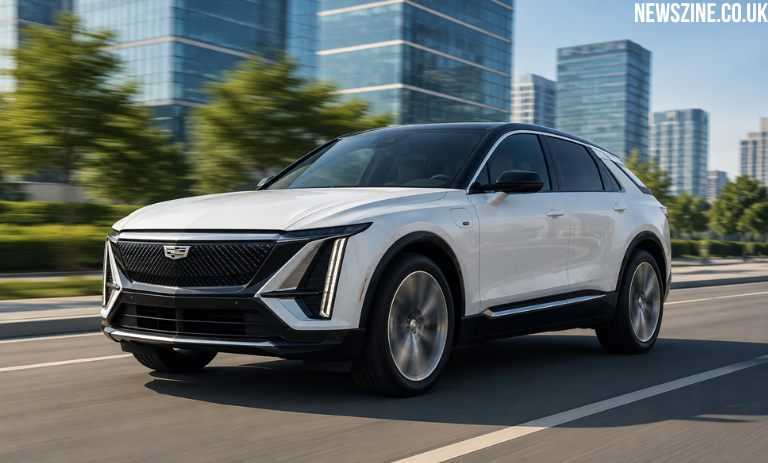
Do the Driving Modes in Cadillac LYRIQ Offer Different Ranges or Battery Usages?
The Cadillac LYRIQ gives drivers several ways to adjust how the electric SUV behaves. Its available driving modes are intended to suit ordinary roads, more responsive driving, difficult winter conditions, and personal preferences. Since every movement of an electric vehicle depends on stored electricity, it is reasonable to ask whether selecting a different mode changes battery usage or driving range.
The important distinction is between battery capacity and energy consumption. Changing a drive mode does not install more energy in the battery or create a separate reserve. Instead, it changes aspects of vehicle response. Those changes can influence how the driver accelerates, slows down, and uses the available power.
There is therefore no reliable formula saying that Sport always loses a certain number of miles or Tour always adds a fixed amount of range. Real-world results depend on how the vehicle is driven and the conditions surrounding each journey.
1. What Changes When a LYRIQ Drive Mode Is Selected?
Selecting a different mode changes the character of the vehicle rather than the size of its energy supply. Accelerator response, steering behaviour, traction management, and other settings can be adjusted according to the selected mode and vehicle configuration.
This matters because an electric motor can respond quickly when the driver presses the accelerator. A sharper accelerator calibration can make strong acceleration easier to access. A calmer response may help the driver apply power more gradually.
Battery usage is consequently an indirect result of the mode. The vehicle is still drawing electricity from the same battery, but the rate at which energy is consumed can vary with the driver’s inputs.
A. Battery Capacity Does Not Change
The LYRIQ does not have one battery capacity for Tour Mode and another for Sport. If the vehicle begins a journey at the same state of charge, changing the mode does not suddenly increase the amount of electricity stored inside the battery.
What can change is how quickly that stored electricity is consumed. If a mode leads to frequent high-power acceleration, the battery can lose charge faster. If the vehicle is driven smoothly, consumption can remain lower.
B. Driving Behaviour Creates the Bigger Difference
Two LYRIQs using the same mode can return different efficiency results. One driver may accelerate gradually and maintain a consistent speed, while another repeatedly accelerates hard and brakes heavily.
For this reason, the mode name should not be viewed as an exact range setting. Driver behaviour remains one of the strongest factors determining practical battery consumption.
2. Tour Mode as the Everyday Efficiency Choice
Tour Mode is intended for normal driving and provides a balanced response. It does not place the same emphasis on quick performance as Sport Mode or the specialised traction behaviour associated with Snow/Ice Mode.
For everyday commuting, shopping trips, and longer journeys, this balanced character makes Tour a sensible starting point. Drivers trying to preserve range can combine it with gradual acceleration and moderate speeds.
Tour should not be mistaken for a dedicated economy button, however. Poor driving habits can still result in high consumption. A LYRIQ travelling rapidly for a long period will require significant energy regardless of whether Tour Mode is active.
A. Why Smooth Acceleration Helps
Moving a heavy electric SUV from low speed to high speed requires energy. The harder the vehicle is accelerated, the greater the immediate power demand can become.
Gradual acceleration spreads that demand more evenly. Tour Mode can make smooth power delivery feel natural, but the driver still decides how far and how quickly the accelerator is pressed.
B. Tour Mode on Longer Journeys
On longer journeys, maintaining a stable speed can be more important than repeatedly changing modes. Continuous acceleration and deceleration wastes energy that could otherwise be used to cover additional distance.
Tour is therefore well suited to routine long-distance travel, but drivers should also pay attention to speed, traffic, wind, temperature, and climate-control use.
3. Sport Mode and Increased Power Demand
Sport Mode is intended to provide a more responsive driving character. The LYRIQ can feel quicker to react to accelerator inputs, giving the driver easier access to the performance of its electric powertrain.
The mode does not continuously force the motors to consume maximum electricity. If the driver selects Sport and maintains a steady pace, energy consumption does not automatically jump to an extreme level.
The difference becomes more noticeable when the driver uses the sharper response frequently. Strong acceleration requires substantial power, and repeated bursts can reduce the distance available from the remaining charge.
A. Why Fast Acceleration Costs Range
Electric motors deliver torque rapidly, which is one reason electric vehicles can accelerate strongly. That performance requires electricity from the high-voltage battery.
Using maximum or near-maximum acceleration repeatedly places greater demands on the stored energy. Over a complete journey, this can translate into higher consumption per mile.
B. Can Sport Still Be Driven Efficiently?
Yes. Selecting Sport does not prevent a driver from using the accelerator gently. If speed and acceleration remain controlled, the efficiency gap compared with Tour may be much smaller than expected.
This is why assigning an exact range penalty to Sport Mode would be misleading. How the driver uses the mode matters more than simply having it selected.
C. When Sport Mode Makes Sense
Sport is useful when the driver wants sharper vehicle responses. There is no need to treat it as a setting that must always be avoided because the LYRIQ is electric.
Drivers who are running low on charge or attempting to maximise distance, however, have little reason to demand repeated high performance. Under those circumstances, Tour and smoother driving are more practical choices.
4. Snow/Ice Mode Is About Traction, Not Extra Miles
Snow/Ice Mode serves a different purpose from Sport and Tour. It is intended to make the LYRIQ easier to control when available traction is reduced by slippery conditions.
Power delivery can be managed more carefully so that sudden torque is less likely to cause wheel slip. That behaviour can make acceleration feel slower, but the purpose is improved control rather than deliberate energy saving.
Drivers may nevertheless notice that their range is lower when Snow/Ice Mode is being used. The reason often has more to do with winter conditions than with the mode.
A. Cold Batteries and Winter Range
Low temperatures can make an electric vehicle less efficient. Energy may also be needed to bring the battery toward a suitable operating temperature.
At the same time, passengers are likely to use cabin heating. All of this electricity comes from the vehicle’s energy supply, leaving less available for propulsion.
B. Snow Creates Additional Resistance
Driving through snow or slush can require more energy than travelling over a clear, dry road. The tyres encounter greater resistance, so the motors may need to work harder to keep the vehicle moving.
Winter tyre pressures can also change as temperatures fall. Correct tyre pressure is important because unnecessary rolling resistance can reduce efficiency.
C. Safety Should Come Before Range
Drivers should not avoid Snow/Ice Mode simply because they are concerned about electricity consumption. If road conditions require additional traction management, vehicle control is more important than trying to save a small amount of charge.
Range planning should instead account for winter conditions before the journey begins.
5. My Mode Can Produce Different Results
My Mode allows the driving experience to be personalised where supported by the vehicle. Instead of accepting one predefined combination of responses, the driver can choose preferred settings for certain vehicle characteristics.
That flexibility makes it impossible to describe My Mode as either efficient or inefficient on its own. The result depends on the chosen configuration and how the vehicle is subsequently driven.
A mild configuration used by a careful driver could deliver efficient results. A sharper configuration combined with aggressive acceleration could produce considerably higher consumption.
A. Setting Up My Mode for Daily Use
Drivers who use My Mode regularly can configure it around comfort and predictable vehicle response. A setup that makes smooth accelerator control easy may work well for commuting.
The important point is consistency. If a driver constantly changes acceleration patterns, comparing battery consumption becomes difficult regardless of the selected configuration.
B. Testing Your Personal Configuration
The most useful method is to record consumption across several similar trips. A regular commute provides a better test than a single short journey.
Drivers can compare how much battery is used in Tour with the amount consumed using their preferred My Mode settings. Similar weather, speed, traffic, and climate-control settings will produce a fairer comparison.
6. Regenerative Braking Changes the Efficiency Picture
Electric vehicles have an important advantage when slowing down: some movement energy can be converted back into electrical energy. This process is known as regenerative braking.
The LYRIQ provides regenerative driving features that can reduce reliance on conventional friction braking in suitable situations. This is particularly useful in urban environments where slowing and stopping happen frequently.
Regeneration improves energy management, but it does not create free electricity. Energy losses occur whenever power moves between the battery, motors, wheels, and back again.
A. One-Pedal Driving in Traffic
One-Pedal Driving allows the vehicle to slow when the accelerator is released. Drivers can manage much of their speed using the accelerator alone once they become familiar with the system.
In stop-and-go traffic, this can provide frequent opportunities for regenerative braking while reducing unnecessary use of the friction brakes.
B. Regeneration Cannot Recover Every Loss
If a driver accelerates hard to 60 mph and immediately slows again, regeneration may return some energy to the battery. It cannot return everything that was used.
Avoiding unnecessary acceleration in the first place is therefore usually more efficient than attempting to recover the energy afterwards.
7. Highway Speed Can Matter More Than Drive Mode
Drive mode receives considerable attention because it is an obvious setting visible to the driver. Highway speed can have a much greater influence on actual range.
As a vehicle travels faster, it encounters increasing aerodynamic resistance. More electrical power is required to push the LYRIQ through the air and maintain that higher speed.
A driver could therefore use Tour Mode and still experience disappointing efficiency if travelling quickly for long periods.
A. Steady Speed Helps Reduce Waste
Constantly changing speed requires the vehicle to repeatedly use energy for acceleration. Maintaining a stable pace where traffic permits can reduce unnecessary power demand.
Smooth highway driving can consequently be more useful for range than constantly changing vehicle settings.
B. Sport Versus Tour Is Not the Whole Story
Imagine one LYRIQ travelling gently in Sport Mode while another is being driven much faster in Tour. It is entirely possible for the Tour vehicle to consume more electricity.
This example demonstrates why mode selection cannot be separated from driving behaviour.
8. Heating and Air Conditioning Use Battery Energy
Not all electricity stored in the LYRIQ battery goes directly to moving the wheels. Various vehicle systems also need energy, including cabin climate control.
Heating becomes particularly important during cold weather because passengers may need a warm cabin throughout the journey. Cooling the interior during very hot weather also requires electricity.
The impact may be especially noticeable on shorter trips because climate systems can represent a larger proportion of total journey energy use.
A. Preconditioning Can Help Before Departure
When the vehicle is connected to charging equipment, preparing the cabin before departure can reduce the amount of battery energy needed immediately after the journey begins.
This can be particularly useful in very cold or hot conditions when significant cabin temperature adjustment is required.
B. Moderate Climate Settings Are More Practical
Drivers do not need to sacrifice comfort to save every possible mile. Using climate control sensibly is a more realistic approach.
When range is limited, avoiding unnecessarily extreme temperature settings may help reduce auxiliary energy consumption.
9. Why the Range Display Keeps Changing
The estimated range displayed in an electric vehicle is not a fixed promise. It is a prediction of how far the remaining energy might carry the vehicle.
Recent driving behaviour can influence that prediction. After a period of higher consumption, the displayed range may fall faster. Following more efficient driving, the estimate may adjust again.
This explains why drivers should not immediately assume that a drive-mode change has directly caused every movement in the range estimate.
A. Battery Percentage Tells a Different Story
Battery percentage represents remaining charge, whereas estimated range converts available energy into an expected distance.
The same battery percentage can therefore correspond to different estimated mileages depending on operating conditions and recent energy consumption.
B. Look at Consumption Over Complete Trips
A better comparison involves measuring how much energy is used over an entire journey. Even better, drivers can repeat the same route several times.
Averages reduce the influence of unusual traffic, wind, or temperature on one particular trip.
10. RWD and AWD Should Not Be Confused With Drive Modes
The LYRIQ can be offered in different powertrain configurations, including rear-wheel-drive and all-wheel-drive versions. These are physical differences in the vehicle rather than temporary drive-mode selections.
An AWD model uses additional propulsion hardware to provide power through more than one axle. That can produce different efficiency and range results compared with a single-motor version.
Drivers comparing online range experiences should therefore check which LYRIQ configuration is being discussed.
A. Different Models Can Have Different Range Ratings
Two LYRIQs may look similar while having different motors, wheels, equipment, or other specifications. Those differences can affect their official and real-world range.
It would be inaccurate to attribute every difference between them to Tour or Sport Mode.
B. Compare Like With Like
Owners trying to measure drive-mode efficiency should compare results from the same vehicle whenever possible.
Using the same car removes many variables and makes it easier to identify whether driving behaviour associated with a particular mode is affecting consumption.
11. Practical Ways to Get More Range From a LYRIQ
Choosing Tour Mode is a sensible first move when efficiency matters, but it should be combined with suitable driving habits. Gradual acceleration and sensible cruising speeds can reduce unnecessary power demand.
Drivers should also keep tyres correctly inflated and avoid carrying unnecessary heavy items. Additional resistance and weight require energy to move, particularly during repeated acceleration.
Route planning can help as well. Knowing where charging stations are located reduces the need to drive aggressively or worry about reaching a charger with very little battery remaining.
A. Watch Energy Use Instead of Guessing
The vehicle’s energy information can help drivers understand their own consumption patterns. Comparing several journeys can reveal whether high speed, acceleration, climate use, or weather is having the greatest impact.
Real driving data from the owner’s own LYRIQ is more useful than assuming every vehicle will achieve exactly the same result.
B. Choose the Mode for the Situation
Tour is suitable for ordinary travel, Sport for more responsive driving, and Snow/Ice for slippery conditions. My Mode provides another option for drivers who prefer personalised responses.
There is no need to remain in one setting for every journey. The driver can choose the mode that fits the road and then manage battery consumption through sensible driving.
12. Final Answer: Do LYRIQ Drive Modes Give Different Range?
Cadillac LYRIQ drive modes can influence battery usage, but they should not be viewed as separate fixed-range settings. Selecting another mode does not change the amount of electricity physically stored in the battery.
Tour generally makes the most sense when efficiency is the main objective. Sport can lead to greater consumption when its stronger response encourages hard acceleration. Snow/Ice focuses on maintaining control in difficult conditions, while My Mode varies according to the driver’s configuration.
Speed, temperature, road surface, acceleration, climate control, tyre pressure, and regenerative braking can all affect the final result. In many situations, these factors can matter more than the name of the selected mode.
For maximum practical range, drivers should combine an appropriate drive mode with smooth acceleration, moderate speeds, sensible climate use, and proper vehicle maintenance. The LYRIQ’s modes change how the vehicle behaves; the way that behaviour is used determines much of the actual battery consumption.