David Williams: Biography, Career, Personal Life, Books and Television Success
David Williams
David Williams, professionally known as David Walliams, is a British comedian, actor, television presenter and children’s author who has established a career across several areas of entertainment. He became widely recognised through his comedy partnership with Matt Lucas and later developed a successful career writing books for children. His work includes television comedy, acting, presenting, publishing, theatre and charity fundraising.
Born on 20 August 1971 in Wimbledon, London, Walliams developed an interest in acting and performing during his early years. His professional breakthrough came through the BBC comedy programme Little Britain, which introduced his character-based humour to a large audience. He later became a familiar face on Britain’s Got Talent, where he served as a judge for more than a decade. Alongside his television career, he wrote numerous children’s novels that achieved commercial success in Britain and internationally. However, his public career has also involved controversies concerning his television performances, professional conduct and publishing relationships.
David Williams’ Early Life and Family Background
David Edward Williams was born into a British family and spent much of his childhood in Banstead, Surrey. His father, Peter Williams, worked as an engineer for London Transport, while his mother, Kathleen Williams, was employed as a laboratory technician. He grew up alongside his sister Julie in a household that had no direct professional connection with the entertainment industry. His upbringing provided a relatively ordinary background before he developed an interest in comedy and acting.
He attended Collingwood Boys’ School and later continued his education at Reigate Grammar School. During his school years, he became interested in performing and entertaining others. His interest in acting eventually influenced his decision to study drama at the University of Bristol, where he enrolled in 1989 and graduated in 1992. University life allowed him to develop his understanding of theatre, performance and character development. He also became involved with the National Youth Theatre, where he met Matt Lucas, a fellow aspiring performer who would later become his comedy partner.
Why David Williams Changed His Professional Name
Many people searching for David Williams are surprised to discover that the entertainer is professionally known as David Walliams. The change occurred during the early stages of his acting career when he registered with Equity, the performers’ trade union. Another performer was already using the name David Williams, so he needed to adopt a different professional identity.
Rather than selecting an entirely unrelated surname, he modified the spelling of Williams to Walliams. This adjustment allowed him to maintain a connection with his original name while creating a distinct identity for television and theatre work. As his career progressed, David Walliams became the name associated with his comedy programmes, books, awards and public appearances. His birth name remains part of his biography, but the altered surname is used throughout his professional career.
How David Walliams Started His Comedy Career
Walliams began his entertainment career by appearing in smaller television productions and comedy programmes. His early work involved experimenting with different fictional personalities, using costumes and developing exaggerated character behaviour. These experiences helped him understand how comedy could be created through dialogue, facial expressions and interactions between performers.
His professional partnership with Matt Lucas gradually became an important part of his career. The pair worked together on productions such as Rock Profile, Mash and Peas and Sir Bernard’s Stately Homes. These programmes allowed them to develop their approach to sketch comedy before moving towards larger television projects. Their performances often involved portraying several characters within the same production, using distinctive voices and appearances to make each character recognisable.
Although their early programmes attracted relatively limited audiences, they helped establish a working relationship that eventually produced Little Britain. This later became the project most strongly associated with their success in British television comedy.
David Walliams and the Success of Little Britain
Little Britain became one of the most important programmes in Walliams’s entertainment career. The series began on television in 2003 after initially being developed for radio. It featured a collection of fictional characters representing exaggerated aspects of British life. Walliams and Matt Lucas performed many of these characters themselves, often changing costumes, voices and physical appearances between sketches.
Walliams became particularly recognised for characters including Emily Howard and Sebastian Love. The programme attracted attention because of its unusual personalities, recurring jokes and exaggerated social situations. Its popularity increased when it moved from BBC Three to BBC One, introducing the comedy to a larger television audience. The success of the series also led to live performances and an American adaptation.
However, the programme later faced criticism regarding certain portrayals of race, disability and other personal characteristics. Some sketches that attracted audiences during the original broadcasts were subsequently reconsidered because of changing attitudes towards representation in comedy. Walliams and Lucas acknowledged concerns surrounding aspects of their earlier work. Despite these controversies, Little Britain remains a significant part of Walliams’s professional history because it established his reputation and helped create opportunities in other entertainment fields.
Come Fly with Me and Other Television Projects
Following their work on Little Britain, Walliams and Lucas reunited for the BBC comedy series Come Fly with Me, which began broadcasting in December 2010. The programme was based around a fictional airport and followed the activities of airline employees, passengers and other characters connected with air travel. Both performers played multiple roles, continuing the character-based format that had brought them recognition.
The airport setting allowed the programme to explore workplace relationships, customer complaints, travel problems and unusual passenger behaviour. Although the series attracted substantial audiences, it also became controversial because of its portrayal of characters from different ethnic backgrounds. The production did not continue into a second series.
Walliams later pursued several individual television projects. He created and starred in Big School, a BBC sitcom in which he portrayed a chemistry teacher working at a fictional secondary school. He also appeared in Partners in Crime, a television adaptation of stories by Agatha Christie, playing Tommy Beresford. His other acting appearances included Doctor Who, Blandings and various television films. These roles allowed him to explore different types of characters beyond the sketch comedy format.
David Walliams’ Career on Britain’s Got Talent
In 2012, Walliams became a judge on Britain’s Got Talent, sharing the panel with Simon Cowell, Amanda Holden and Alesha Dixon. His involvement introduced him to audiences who may not have followed his earlier comedy programmes. The talent competition featured singers, dancers, comedians, magicians and other performers competing for recognition, while the judges evaluated their performances and provided feedback.
Walliams developed a recognisable judging style that frequently involved jokes, playful exchanges with Simon Cowell and supportive comments towards contestants. His personality became an established part of the programme, and he received recognition at the National Television Awards during his time on the panel. His involvement also increased his television visibility and supported his broader entertainment career.
However, his association with the programme ended following controversy surrounding derogatory comments he had made about contestants during recording breaks. The remarks became public in 2022, and Walliams subsequently apologised for them. A legal dispute concerning the recording and disclosure of the comments was later settled. He did not return to the judging panel, and Bruno Tonioli became his replacement.
David Walliams’ Journey as a Children’s Author
Walliams entered the world of children’s literature in 2008 when he released his debut novel, The Boy in the Dress. The novel follows a young boy whose personal interests challenge the expectations of people around him. Its combination of humour, friendship and emotional experiences introduced readers to an approach that would become common throughout Walliams’s writing career.
His second novel, Mr Stink, followed in 2009 and told the story of a young girl who develops an unusual friendship with a homeless man. The book explored kindness, family relationships and the importance of understanding people beyond their circumstances. The positive commercial response to his early books encouraged Walliams to continue writing for younger audiences.
Over the following years, he published numerous novels featuring unusual characters, difficult family situations and unexpected adventures. His books became available in many countries and were translated into multiple languages. His publishing career eventually developed into a major part of his professional identity, bringing him recognition among children, parents, teachers and booksellers.
Popular Children’s Books Written by David Walliams
Among Walliams’s best-known novels is Gangsta Granny, which follows a boy named Ben who initially dislikes spending time with his grandmother. His attitude changes when he discovers that she has an unexpected history involving adventurous activities. The story explores family relationships and encourages readers to recognise that older relatives may have experiences that younger family members do not understand.
Another successful novel, Billionaire Boy, introduces Joe Spud, a wealthy child who possesses almost everything money can purchase but struggles to find genuine friendship. The story focuses on the difference between material comfort and emotional happiness. Walliams also wrote Demon Dentist, which follows a young boy whose life becomes frightening after a mysterious dentist arrives in town. The novel combines fantasy, mystery and humour through its unusual characters.
Other notable books include Awful Auntie, Ratburger, Grandpa’s Great Escape, The Midnight Gang, Bad Dad, The Ice Monster, Code Name Bananas, Spaceboy and Robodog. Although their plots vary, many explore childhood loneliness, family difficulties, friendship and unfair treatment by adults. Several have been adapted for television, extending their reach beyond readers of the original novels.
David Walliams’ Writing Style and Literary Influence
Walliams developed a recognisable writing style based on humour, unusual characters and situations that place children at the centre of the story. His protagonists often face difficulties at school, experience family disagreements or feel misunderstood by the adults around them. These problems are frequently explored through exaggerated fictional events that combine comedy with adventure.
His novels generally contain short chapters, illustrations and dialogue that make the stories accessible to younger readers. He has worked with illustrators including Quentin Blake and Tony Ross, whose artwork contributed to the presentation of his books. The illustrations help readers understand characters and add visual humour to the stories.
His writing has frequently been compared with that of Roald Dahl because both authors use unconventional adults, imaginative plots and child-centred storytelling. However, Walliams’s books have their own recurring themes and character types. While many readers appreciate their humour and accessible language, some critics have questioned particular stereotypes and descriptions used in his fiction.
Television Adaptations of David Walliams’ Books
The commercial popularity of Walliams’s children’s novels led to several television adaptations. Stories such as Mr Stink, Gangsta Granny, The Boy in the Dress and Grandpa’s Great Escape were adapted for television, allowing audiences to experience the characters and plots in a different format.
These productions introduced the books to viewers who may not have read them and helped maintain public interest in his writing. Some adaptations were broadcast during Christmas television schedules, making them part of seasonal family entertainment. Walliams also participated in certain productions, connecting his acting experience with his work as an author.
Although television adaptations sometimes changed particular details to suit the screen, they generally retained the central stories and relationships. Their development demonstrated the commercial potential of Walliams’s fictional characters beyond the publishing industry.
Publishing Success and Professional Controversies
Walliams achieved substantial commercial success through his children’s books, selling millions of copies internationally. His relationship with HarperCollins supported the publication and distribution of his work for many years. The books became familiar in bookshops, libraries and family collections, with some titles receiving further attention through television adaptations.
However, his publishing career faced serious difficulties following allegations about his behaviour towards female employees at the company. In December 2025, HarperCollins announced that it would no longer publish new books by Walliams. He denied allegations of inappropriate behaviour. In September 2026, the publisher also confirmed plans to discontinue the sale and reprinting of his existing titles.
These developments marked a significant change in his professional relationship with the publishing industry. They also generated discussion about how allegations concerning public figures can affect commercial partnerships and the future availability of established creative work.
David Walliams’ Theatre and Film Career
Alongside television and writing, Walliams has participated in stage productions and films. In 2008, he appeared alongside Michael Gambon in Harold Pinter’s No Man’s Land, demonstrating an interest in dramatic theatre beyond his comedy performances. He later played Bottom in a London production of Shakespeare’s A Midsummer Night’s Dream.
His film appearances include the American comedy Dinner for Schmucks, and he has also worked in voice acting and other entertainment projects. These opportunities allowed him to collaborate with performers from different professional backgrounds while exploring roles outside his familiar television characters.
Although theatre and film have not been the main focus of his commercial success, they remain important parts of his professional experience and illustrate his involvement in different forms of acting.
David Walliams’ Charity Work and Swimming Challenges
Walliams has participated in several major charity fundraising activities, particularly those associated with Sport Relief and Comic Relief. One of his most widely recognised achievements was swimming across the English Channel in July 2006. The challenge required extensive physical preparation, and he completed the crossing in approximately ten and a half hours while helping raise more than £1 million for charity.
He later swam across the Strait of Gibraltar alongside James Cracknell in 2008. Another major challenge took place in 2011, when he completed a long-distance swim along the River Thames. The demanding journey attracted considerable public attention and raised substantial charitable donations.
These activities became an important part of his public profile beyond comedy and literature. His contributions to charity and the arts were formally recognised in 2017 when he was appointed an Officer of the Order of the British Empire.
David Walliams’ Personal Life, Marriage and Children
Walliams married Dutch model Lara Stone in 2010. Their relationship attracted attention from entertainment publications because both were established public figures. The couple welcomed their son, Alfred, in 2013, before their marriage ended in divorce in 2015.
Walliams has occasionally spoken about fatherhood and the importance of family relationships, although he has generally kept detailed information about his son’s life private. His personal experiences have sometimes been discussed alongside his writing, particularly because several of his novels explore relationships between children and family members.
His marriage and family background remain subjects of public interest, but his professional achievements have received considerably more coverage throughout his career.
Is Dr David Williams the Same Person as David Walliams?
People searching for Dr David Williams may encounter information about the British comedian because his original name was David Edward Williams. However, David Walliams is professionally known for acting, comedy, television presenting and children’s literature rather than medicine.
The title Dr David Williams may refer to a medical practitioner, academic researcher or another professional who shares the surname. There is no reason to assume that individuals using these similar names are the same person.
Walliams studied drama at the University of Bristol and subsequently entered the entertainment industry. His professional surname provides a useful distinction when researching his biography, career and published books.
Andy and David Williams: How Their Appearances Have Changed Over Time
The search phrase “what do Andy and David Williams look like now” can refer to entertainers who are unrelated to David Walliams. The similarity between their names sometimes creates confusion, particularly when information about singers and actors appears in the same search results.
Andy Williams was an American singer and television personality who became known for his recordings and television appearances. He died in 2012. Other entertainers named David Williams should not automatically be confused with the British comedian, whose professional name is David Walliams.
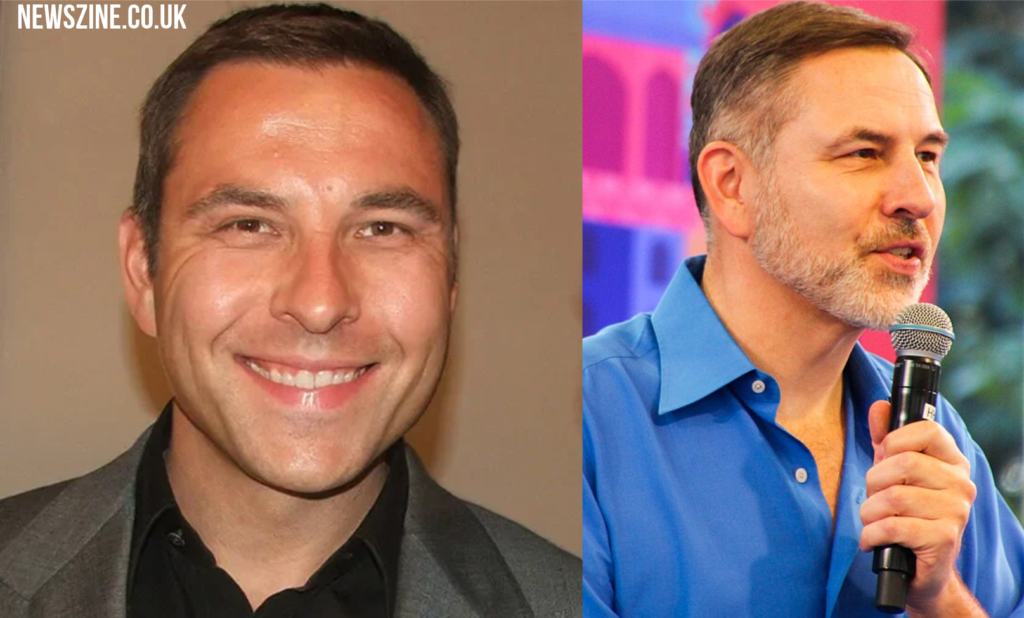
Walliams’s appearance has changed naturally throughout his career, from his early television comedy years to his later appearances as a presenter and author. Public photographs show him at different stages of his professional life, but searches involving Andy Williams do not necessarily concern him.
David Walliams’ Achievements and Public Reputation
Walliams’s professional history includes television comedy, children’s publishing, acting, presenting and charitable fundraising. His work with Matt Lucas introduced him to a wide audience, while his books allowed him to build a separate career in children’s entertainment. His role on Britain’s Got Talent also increased his recognition among television viewers.
Despite these achievements, his public reputation has been affected by controversy. Criticism of earlier comedy material, the circumstances surrounding his departure from Britain’s Got Talent and allegations connected with his publishing relationship have contributed to changing public perceptions.
His career therefore involves both major commercial achievements and significant professional difficulties. These different experiences remain important when examining his influence on British popular entertainment.
Conclusion
David Williams, widely recognised as David Walliams, built a career spanning comedy, acting, television presenting, children’s literature and charitable fundraising. His partnership with Matt Lucas helped establish his reputation through Little Britain, while his novels introduced his work to millions of younger readers. His involvement in Britain’s Got Talent, theatrical productions and fundraising challenges added further dimensions to his professional life.
Although his career has included substantial success, controversies and changes in his publishing relationships have affected his public standing. His professional journey reflects the opportunities and challenges involved in maintaining a career across several areas of entertainment. David Walliams remains a recognisable figure in British television and children’s publishing history, with a body of work that has reached audiences across different generations.