How Well-Planned Mechanical Services Support Efficient Commercial Buildings
mechanical services Telford
Introduction
Behind every smoothly operating commercial building is a network of mechanical equipment that supports its daily activities. Boilers supply heat and hot water, pumps move fluids through pipework, ventilation systems circulate air, and air conditioning equipment helps maintain suitable indoor temperatures. When these installations are properly designed and maintained, businesses can manage their facilities more effectively and reduce unnecessary operational disruption.
However, mechanical systems can become complicated as buildings expand, equipment ages and business requirements change. A replacement boiler may require modifications to existing pipework, while a new ventilation installation might need to be coordinated with electrical controls and other services.
Understanding how these components work together helps property owners make better decisions about installation, maintenance and future improvements.
What Are Mechanical Services in Commercial Buildings?
Mechanical services encompass the equipment and infrastructure responsible for functions such as heating, cooling, ventilation, hot-water production and fluid distribution.
In a commercial property, these services may include boilers, water heaters, pumps, heat exchangers, pipework, ventilation ductwork, extraction systems, chillers and air conditioning equipment. Electrical controls often form part of the wider installation because they regulate how mechanical equipment operates.
The requirements vary considerably between properties. An office building may need reliable heating, hot water and air conditioning, while a factory could require additional extraction equipment, specialist pipework and mechanical installations designed around its production processes.
Effective engineering begins with understanding these requirements. The building’s size, available space, existing infrastructure and operating schedule all influence the most appropriate solution.
Businesses looking for mechanical services Telford can explore the engineering services provided by ACAPS Ltd, including mechanical installations, heating, ventilation, air conditioning, pipework, electrical controls, servicing and repairs.
Why Mechanical System Design Matters
A mechanical installation should be designed around the actual requirements of the building rather than selected solely on the basis of equipment availability or initial price.
Consider a commercial hot-water system. Its capacity must reflect how much hot water the property needs, when demand occurs and how quickly supplies must recover after periods of heavy use. An installation that cannot meet peak demand may create operational difficulties, while unnecessarily large equipment can increase capital expenditure and occupy valuable plant-room space.
Similar considerations apply to heating, cooling and ventilation systems.
A well-planned design should address several key factors:
- System capacity: Equipment must be suitable for the expected demand.
- Building layout: Available space and existing infrastructure affect equipment positioning and pipework routes.
- Operational requirements: Some premises need continuous operation, while others have predictable periods of use.
- Maintenance access: Important components should be accessible for inspection, servicing and repair.
- Energy consumption: Equipment selection and controls should reflect the building’s operational needs.
- Future requirements: Planned extensions, refurbishments or changes in occupancy may influence design decisions.
Assessing these factors early can help prevent installation difficulties and reduce the likelihood of expensive modifications later.
Pipework: An Essential Part of Mechanical Infrastructure
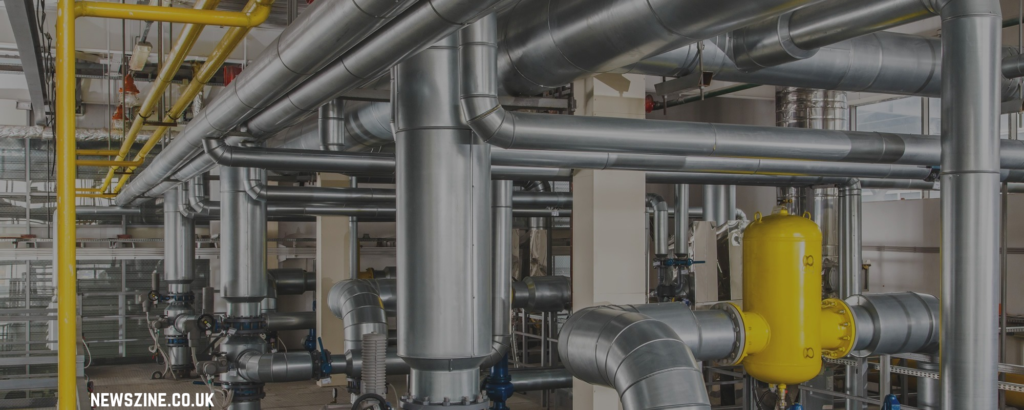
Pipework is a fundamental component of many commercial mechanical systems. It carries water and other suitable fluids between equipment and distribution points, supporting heating, cooling and hot-water applications.
Although much of this infrastructure is hidden behind walls, above ceilings or inside plant rooms, its condition directly affects system performance.
Leaks, corrosion, damaged insulation and deteriorating connections can cause operational problems. In some circumstances, a small leak may also damage nearby equipment, ceilings or building finishes.
When investigating pipework faults, engineers need to establish the source of the problem and determine whether other components are affected.
The appropriate repair depends on the condition of the installation. A damaged connection might require a local repair, whereas extensive corrosion or repeated failures may justify replacing a larger section.
New installations also require careful planning. Pipe sizes, routes, supports, insulation and connection points must be appropriate for the system’s operating requirements.
Where modifications are needed, the work should be coordinated with associated equipment and electrical controls. This helps ensure that the completed installation functions as intended.
Commercial Heating and Hot-Water Installations
Heating and hot-water equipment is essential to many workplaces, including offices, industrial buildings, hospitality premises and commercial facilities with substantial hot-water demand.
Boilers and water heaters must be selected according to the property’s requirements and installed with appropriate connections, controls and safety provisions.
Replacement projects can be particularly challenging when equipment is located in confined plant rooms, basements, loft spaces or other areas with limited access.
A large water heater may not fit through an existing doorway or staircase. In such situations, the installation team may need to assess alternative access routes and arrange suitable lifting equipment.
These practical considerations should be addressed before equipment is delivered.
A typical project may involve an initial survey, equipment selection, preparation of a quotation, installation planning, removal of existing components, pipework modifications and final commissioning.
Depending on the installation, additional work may be required for electrical connections, gas services, flues, insulation and associated mechanical components.
Businesses should ensure that relevant work is undertaken by appropriately qualified professionals and that the completed installation is tested before being returned to service.
Careful planning helps reduce avoidable delays and provides a clearer understanding of the work involved.
Ventilation, Ductwork and Air Extraction
Mechanical services also play an important role in controlling indoor air movement.
Commercial ventilation systems may introduce fresh air, remove stale air or help manage heat and moisture. Industrial extraction systems can serve a more specific purpose by capturing airborne contaminants near the processes that generate them.
The design depends on the environment. An office may need general mechanical ventilation, whereas a workshop producing fumes may require dedicated extraction equipment and suitable filtration or discharge arrangements.
Ductwork is central to many of these installations. Its layout influences airflow, resistance and the amount of space available for other building services.
Poorly coordinated duct routes can create installation difficulties, particularly in older buildings with limited ceiling voids or crowded plant rooms.
When planning a new system, engineers should consider equipment positioning, duct dimensions, access for cleaning and maintenance, and coordination with heating, cooling and electrical services.
Once the installation is complete, appropriate testing and commissioning help establish whether the system operates according to its design.
Regular inspections are also important. Damaged ductwork, obstructed filters and worn fan components can reduce performance and may require corrective work.
Air Conditioning and Chiller Systems
Many commercial buildings need cooling to maintain suitable indoor temperatures or support particular operational requirements.
Air conditioning systems vary in size and configuration. Some serve individual rooms, while others form part of larger installations supplying multiple areas.
Chillers can provide cooling for commercial or industrial applications where a centralised cooling arrangement is appropriate. These systems may involve pumps, pipework, heat exchangers and associated control equipment.
Because the components are interconnected, a fault in one part of the installation can affect overall performance.
For example, a pump problem may interfere with fluid circulation, while a control fault could prevent equipment from operating as expected. Reduced cooling performance can also arise from several different causes, making a proper diagnosis important.
Planned servicing helps identify developing problems and allows components to be inspected according to the equipment manufacturer’s recommendations.
Businesses should also consider the condition of insulation, control settings and operating schedules when reviewing system performance.
If an existing installation repeatedly fails to meet demand, an engineering assessment can help determine whether the cause is a repairable fault, unsuitable configuration or a need for additional capacity.
Coordinating Mechanical and Electrical Work
Mechanical equipment often depends on electrical systems to function correctly. Pumps, fans, compressors, control panels and other components require suitable electrical supplies and control arrangements.
Consequently, mechanical installation projects may involve coordination between engineers working on different parts of the building.
For example, replacing a ventilation unit could require changes to electrical connections, control wiring, ductwork and supporting structures. Similarly, a boiler replacement may involve work on pipework, flues and electrical controls.
Planning these tasks together helps reduce conflicts between trades and ensures that important dependencies are considered before installation begins.
Control panels also require appropriate design and configuration. They allow equipment to operate according to the intended sequence and can help coordinate different parts of a mechanical installation.
After work is completed, the relevant systems should be tested to verify their operation and identify any issues requiring correction.
Clear documentation is useful for future maintenance because it gives facilities teams a better understanding of the equipment and its connections.
For businesses seeking reliable mechanical engineering support, experienced HVAC specialists Telford can help with the installation, maintenance and repair of heating, ventilation and air conditioning systems to meet the demands of commercial and industrial properties.
Preventive Maintenance for Mechanical Equipment
Mechanical systems operate under different conditions, and their maintenance requirements depend on equipment type, usage and manufacturer guidance.
A boiler used heavily throughout the year will have different service requirements from a ventilation fan operating intermittently in a relatively clean environment.
Preventive maintenance involves inspecting equipment, identifying wear and addressing developing faults before they lead to more serious problems.
Depending on the installation, maintenance activities may include:
- Inspecting pumps, motors and other mechanical components.
- Checking accessible pipework for leaks or damage.
- Examining insulation and pipe supports.
- Inspecting filters, fans and ventilation ductwork.
- Checking controls and associated electrical connections.
- Investigating unusual noises, vibration or operating changes.
- Recording faults, completed repairs and recommended follow-up work.
Maintenance records can help property managers identify repeated failures and make better decisions about replacement budgets.
They also provide useful information when contractors need to investigate an existing system or plan modifications.
Importantly, preventive maintenance should reflect the risks and requirements of the equipment. A single schedule applied indiscriminately to every system may overlook important differences in operating conditions.
Improving Efficiency Without Compromising Performance
Energy efficiency is an important consideration when managing commercial mechanical services. Heating, cooling, hot-water production and ventilation can all contribute to a building’s operating costs.
Improvement opportunities may include replacing inefficient equipment, correcting control problems, improving insulation or adjusting operating schedules.
For example, insulating suitable hot-water pipework can help reduce unwanted heat loss. Reviewing equipment schedules may identify periods when systems operate unnecessarily. Properly maintained filters and components can also help prevent avoidable performance losses.
However, efficiency measures should be selected carefully. Reducing ventilation below the level needed for the building or lowering hot-water capacity without considering demand can create other problems.
A useful assessment examines the complete installation, including the building’s operating patterns and the condition of its equipment.
Where replacement is being considered, businesses should compare the proposed capital cost with anticipated operating requirements, maintenance needs and the expected service life of the equipment.
This provides a more balanced basis for deciding whether repair, upgrade or replacement is the most practical option.
Selecting a Mechanical Services Contractor
Choosing a contractor involves more than finding someone who can install or repair a particular component.
Businesses should consider the technical requirements of the project, the contractor’s relevant experience and whether the proposed service covers all necessary stages of the work.
For larger installations, this may include surveying, design, equipment selection, installation, commissioning and ongoing maintenance.
It is also important to discuss access restrictions, expected timescales, site safety and the potential impact on normal business activities.
ACAPS Ltd provides mechanical engineering and building-services support from Telford, Shropshire. Its published services include boilers and water heaters, pipework, plumbing and flues, ventilation and extraction, ductwork, air conditioning, chiller systems, electrical installations and controls, and mechanical and welding work.
The company works with domestic, commercial and industrial customers across Telford, the West Midlands and other parts of the UK.
Businesses planning a new installation or dealing with an existing mechanical fault can review the company’s service offering and arrange an assessment suited to their property.
Conclusion
Mechanical services are essential to the reliable operation of commercial and industrial buildings. Heating equipment, pipework, pumps, ventilation, air conditioning and electrical controls must work together to meet the demands of the property.
Effective planning helps ensure that installations are appropriate for the building, while professional maintenance supports reliability and helps identify developing faults.
For property owners and facilities managers, the most practical approach combines suitable system design, coordinated installation, regular inspections and informed decisions about equipment upgrades.
Whether the requirement involves replacing a water heater, repairing pipework, installing ventilation or maintaining a larger mechanical system, careful engineering can help businesses manage their facilities and prepare for future operational needs.