
Tom Cruise Tom: His Early Life, Hollywood Career, Famous Movies, and Personal Journey
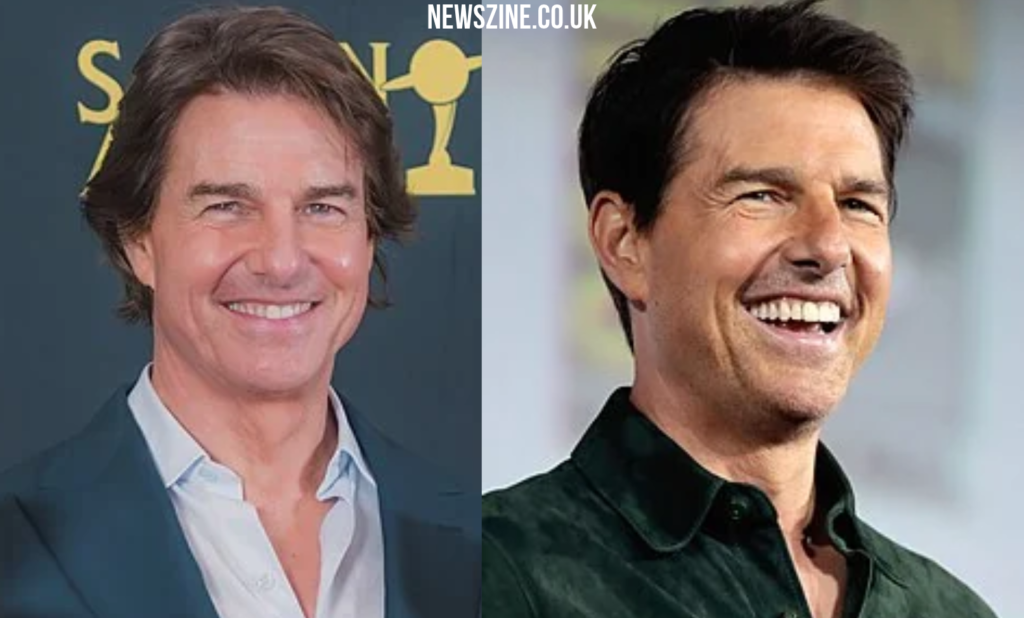
Tom Cruise Tom
Tom Cruise is an American actor and film producer who has built one of the longest-running careers among Hollywood’s leading performers. His films cover several genres, including action, drama, science fiction, romance, and suspense. Over the years, he has become known for taking an active interest in filmmaking, preparing carefully for difficult roles, and participating in physically demanding action scenes. His work in Top Gun, Mission: Impossible, Jerry Maguire, and several other productions has made him a familiar figure to cinema audiences across generations.
Born Thomas Cruise Mapother IV on July 3, 1962, in Syracuse, New York, Cruise did not grow up with the financial advantages commonly associated with successful film stars. His childhood involved frequent moves, changing schools, and family difficulties. He eventually discovered an interest in acting and moved to New York to explore professional opportunities. What began with small film appearances gradually developed into a career involving major studios, established directors, and internationally successful productions.
The story of Tom Cruise is not limited to his achievements as an actor. His involvement in film production, his approach to commercial cinema, and his personal life have attracted considerable public attention. While some aspects of his career have received praise, other parts of his public identity have generated controversy. His professional history provides an interesting example of how an actor can maintain a prominent position in Hollywood while the industry continues to change.
Childhood, Parents, and Family Background
Tom Cruise was raised in a family that experienced financial pressure and considerable instability. His father, Thomas Cruise Mapother III, worked in electrical engineering, while his mother, Mary Lee Pfeiffer, was involved in special education. Cruise grew up alongside his three sisters, and the family relocated several times during his childhood. These changes meant he spent his early years adjusting to different neighbourhoods, schools, and social environments.
Part of his childhood was spent in Canada when his father’s employment took the family to Ottawa. During this period, Cruise attended local schools and began participating in activities that involved performing before an audience. His early experience with school drama introduced him to acting, although he had not yet decided to pursue it professionally. The opportunity to perform gave him a way to express himself outside his regular school activities.
Cruise has spoken publicly about difficulties within his family, particularly his relationship with his father. His parents separated while he was young, and his mother later remarried. Following the separation, Cruise returned to the United States with his mother and sisters. The family continued moving, and his education remained unsettled for several years.
Despite these disruptions, Cruise developed interests in sports and theatre. He briefly attended a Catholic seminary and considered religious life before deciding that it was not the direction he wanted to follow. By the time he completed his education at Glen Ridge High School in New Jersey in 1980, acting had become an increasingly important interest.
Moving to New York and Entering the Film Industry
After graduating from high school, Cruise decided to pursue an acting career. He relocated to New York City, where he attended auditions and looked for opportunities in television and film. The entertainment industry was unfamiliar territory, and he initially had no guarantee that his efforts would lead to steady employment. He supported himself through ordinary work while trying to establish professional connections.
His first film appearance came in the 1981 romantic drama Endless Love. Although his role was small, it introduced him to the practical demands of working on a movie set. Later that year, he appeared in Taps, a military drama involving students at a military academy. The character gave him more screen time and allowed him to demonstrate greater emotional intensity.
In 1983, Cruise joined the ensemble cast of The Outsiders, directed by Francis Ford Coppola. The film followed young people struggling with social divisions, personal loyalty, and difficult family circumstances. Working alongside other emerging actors helped Cruise gain experience and brought him additional industry attention.
That same year, he played a high school student in Risky Business. The film explored teenage independence, ambition, and the unexpected consequences of personal decisions. Cruise’s performance connected with younger audiences, and the movie became an important turning point in his career. It established him as an actor capable of carrying a major production and opened the door to larger opportunities.
How Top Gun Changed Tom Cruise’s Career
Cruise became an internationally recognised film star following the release of Top Gun in 1986. Directed by Tony Scott, the movie centred on a talented naval pilot whose competitive personality creates professional and personal challenges. Cruise portrayed Pete Mitchell, better known as Maverick, a young aviator who must learn to balance individual confidence with teamwork and responsibility.
The movie attracted audiences through its aviation sequences, relationships between characters, and depiction of military training. Cruise’s performance became closely associated with the film’s commercial success. His character represented a mixture of ambition, personal vulnerability, and determination, qualities that appeared in several of his later screen roles.
The success of Top Gun considerably increased Cruise’s recognition in the film industry. Studios began viewing him as a performer who could lead expensive productions and attract a substantial audience. However, he did not immediately focus only on similar action movies. Instead, he accepted roles that allowed him to work with established actors and explore different dramatic situations.
In The Color of Money, released in the same year, Cruise worked alongside Paul Newman. The film followed the relationship between an experienced pool player and a younger competitor whose talent was accompanied by limited discipline. The contrast between the characters created opportunities for Cruise to develop his performance through dialogue and personal conflict rather than physical action alone.
Establishing Himself Through Dramatic Performances
The late 1980s marked an important stage in Cruise’s development as a dramatic actor. In 1988, he appeared in Rain Man alongside Dustin Hoffman. The movie explored the relationship between two brothers who gradually begin to understand each other during a journey across the United States. Cruise played Charlie Babbitt, a businessman whose initial self-interest changes through his experiences with his brother.
The character required Cruise to portray emotional development without dramatic physical transformations. Much of the story depended on conversations, frustration, and changes in behaviour. The film achieved both commercial and critical success, becoming one of the major productions associated with his early career.
In 1989, Cruise took on a demanding role in Born on the Fourth of July, directed by Oliver Stone. He portrayed Ron Kovic, a Vietnam War veteran whose injuries and experiences influence his political beliefs and personal identity. The performance required him to communicate physical limitations, emotional distress, and changes in his understanding of military service.
The role earned Cruise his first Academy Award nomination for Best Actor and strengthened his reputation beyond mainstream entertainment. It demonstrated that he could approach difficult historical subjects and portray characters whose experiences differed significantly from his own.
These performances played an important role in shaping his career. Instead of relying entirely on the popularity of his earlier films, Cruise continued looking for projects in which the characters faced complicated personal and professional circumstances.
Successful Films During the 1990s
Throughout the 1990s, Cruise appeared in several commercially successful films while working with directors from different filmmaking backgrounds. In A Few Good Men, he portrayed a young military lawyer involved in a controversial court case. The film examined professional responsibility, authority, and the difference between following instructions and making independent moral decisions.
He later starred in The Firm, a legal thriller adapted from John Grisham’s novel. Cruise played a lawyer who discovers troubling information about the organisation employing him. The story combined workplace ambition with suspense, placing the main character in a situation where professional success carried serious personal risks.
In 1994, he appeared in Interview with the Vampire, taking on the role of Lestat. The gothic drama represented another departure from the conventional characters associated with him. The performance required a different manner of speaking, appearance, and behaviour, showing his willingness to explore unfamiliar roles.
One of his most recognised performances came in Jerry Maguire in 1996. Cruise played a sports agent who experiences a professional crisis after questioning the values of his industry. The character attempts to rebuild his career while reconsidering his personal relationships. The film connected romantic storytelling with questions about ambition, loyalty, and professional honesty.
Near the end of the decade, Cruise appeared in Eyes Wide Shut and Magnolia. Both projects explored complicated human behaviour, but they approached their subjects differently. Eyes Wide Shut examined trust and uncertainty within marriage, while Magnolia featured Cruise as a motivational speaker struggling with unresolved emotional problems. His performance in Magnolia earned significant critical attention and another Academy Award nomination.
The Mission: Impossible Film Series
The Mission: Impossible movies became a central part of Cruise’s professional identity after the first instalment was released in 1996. Based on an earlier television series, the film introduced Cruise as Ethan Hunt, an intelligence agent involved in secret operations and international investigations. The character combined analytical thinking with physical ability, allowing the films to include both suspense and action.
As the franchise developed, Cruise remained involved as both its leading actor and a producer. Different directors contributed their own filmmaking approaches, but the central character continued to face situations involving deception, technological threats, and difficult decisions. The movies gradually expanded their use of international locations and increasingly complicated action sequences.
A major feature of the series has been Cruise’s participation in demanding stunt work. In Ghost Protocol, he performed sequences on the exterior of the Burj Khalifa in Dubai. Later films included helicopter operations, motorcycle stunts, and extended chase scenes. These sequences required considerable preparation and cooperation with experienced specialists.
The success of the franchise allowed Cruise to maintain a strong connection with action cinema even as he moved into later stages of his career. The series also became an example of how an established character could continue attracting audiences through changes in storytelling, production methods, and supporting casts.
The release of Mission: Impossible – The Final Reckoning in 2025 continued the story of Ethan Hunt and reflected the long relationship between Cruise and the franchise.
Science Fiction and Other Important Film Roles
Cruise has appeared in several science-fiction productions that explore technological developments, unfamiliar environments, and ethical questions. In Minority Report, directed by Steven Spielberg, he portrayed a police officer working within a system designed to predict criminal activity. The film examined the relationship between personal freedom, government authority, and technology.
His later collaboration with Spielberg, War of the Worlds, followed a father attempting to protect his children during an alien invasion. Unlike a conventional military action story, much of the film concentrated on ordinary people responding to extraordinary danger. Cruise’s character was forced to confront responsibilities that he had previously struggled to manage.
In The Last Samurai, Cruise portrayed an American military officer who becomes involved in the political and military changes taking place in nineteenth-century Japan. The story presented conflicts involving tradition, modernisation, and personal loyalty. His role involved extensive physical preparation and participation in historical battle sequences.
Another notable performance came in Collateral, where Cruise played a professional killer operating in Los Angeles. The character differed from his usual heroic roles because he was calculated, emotionally distant, and dangerous. The film allowed him to explore a darker personality within a crime thriller.
He continued working in science fiction with Oblivion and Edge of Tomorrow. The latter involved a soldier repeatedly experiencing the same period during a conflict against an alien force. The film combined action with humour and character development, giving Cruise an opportunity to portray someone who begins as inexperienced and gradually becomes more capable.
Top Gun: Maverick and His Return to a Famous Role
Cruise returned to one of his earliest successful characters in Top Gun: Maverick, released in 2022. The sequel revisited Pete Mitchell decades after the events of the original film, presenting him as an experienced naval aviator who remains committed to flying despite changes in his career and personal circumstances.
The story focused on Maverick’s responsibility for training younger pilots for a dangerous operation. His relationships with the new generation introduced questions about leadership, accountability, and the consequences of earlier choices. The movie also explored his connection with the son of a former flying partner, adding a personal dimension to the military storyline.
The production placed considerable emphasis on aviation footage and practical filming techniques. Cruise and the filmmaking team worked closely with aviation professionals to capture scenes involving real aircraft. The actors underwent preparation to perform effectively during demanding flight sequences.
Top Gun: Maverick became a major commercial success and earned approximately $1.5 billion worldwide. Its performance demonstrated the continuing appeal of Cruise as a leading actor and showed that audiences remained interested in characters associated with films released many years earlier.
The sequel also introduced Cruise to viewers who had not experienced the original Top Gun during its theatrical release. This helped connect two different generations of movie audiences through the same character.
Tom Cruise’s Work as a Film Producer
Acting is only one part of Cruise’s involvement in filmmaking. He has also developed a substantial career as a producer, participating in projects from their early planning stages through production and release. His business interests became more visible after he established Cruise/Wagner Productions with Paula Wagner in 1993.
The company helped develop films in which Cruise appeared, while also participating in projects featuring other performers. His involvement gave him greater influence over creative choices and allowed him to participate in decisions involving budgets, production schedules, and relationships with studios.
Through the Mission: Impossible franchise, Cruise became particularly associated with films in which the leading actor also helped direct the commercial strategy. His financial agreements have sometimes included a share of box-office revenue, meaning his earnings could increase substantially when a movie performed well.
His relationships with studios have changed during his career. Although he experienced a widely reported disagreement with Paramount Pictures in 2006, he later resumed working with the studio on major productions. He also became involved with United Artists and subsequently established a new production partnership with Warner Bros.
This business activity has contributed to his position as a Hollywood figure whose influence extends beyond individual acting assignments.
Personal Life, Marriages, and Children
Cruise’s private life has frequently attracted public attention because of his relationships with other well-known performers. He married actress Mimi Rogers in 1987, but their marriage ended in divorce in 1990. During that period, his professional career was expanding rapidly, and his personal circumstances became a regular subject of entertainment reporting.
Later in 1990, Cruise married Nicole Kidman after they had worked together on Days of Thunder. Their marriage lasted more than a decade, during which they appeared together in additional films. The couple adopted two children, Isabella and Connor, before separating in 2001.
Cruise subsequently had a relationship with actress Penélope Cruz. The two had appeared together in Vanilla Sky, and their relationship continued for several years before ending in 2004.
In 2005, Cruise began dating Katie Holmes. Their relationship received extensive media coverage, particularly following several public appearances and television interviews. They welcomed their daughter, Suri, in April 2006 and married later that year.
Holmes filed for divorce in 2012, and the couple reached a settlement. Since then, Cruise has generally avoided detailed public discussions about his family relationships.
Although his marriages and personal circumstances have received substantial attention, much of his public schedule has continued to centre on film production and promotional appearances.
Religious Beliefs and Public Image
Cruise is a prominent member of the Church of Scientology, a religious organisation with which he became associated during the 1980s. He has publicly discussed his beliefs and credited the organisation with helping him address certain personal challenges.
His involvement has also led to controversy, particularly when he has expressed views about psychiatry and the use of psychiatric medication. His statements during interviews in the mid-2000s generated criticism from medical professionals and people concerned about mental health treatment.
Cruise later apologised to actress Brooke Shields following comments about her treatment for postpartum depression. The incident became an example of how his public beliefs sometimes created disagreements beyond the entertainment industry.
The Church of Scientology has also been the subject of investigations, documentaries, and allegations from former members. Some of these accounts have discussed Cruise’s relationship with the organisation, although various claims have been disputed by his representatives and the church.
His public image therefore includes both his professional achievements and debates surrounding his personal beliefs. These subjects have continued to attract attention even during periods when his films achieved considerable commercial success.
Tom Cruise’s Interest in Aviation and Stunt Work
Aviation has been one of Cruise’s most recognisable interests outside acting. He obtained a pilot certificate during the 1990s and has maintained an interest in different types of aircraft. His flying experience has contributed to his understanding of aviation-related productions and encouraged his involvement in action sequences requiring specialist preparation.
He is also known for participating directly in physically challenging scenes. Instead of depending entirely on visual effects or stunt doubles, Cruise has frequently trained to perform particular movements himself. These include climbing, running, motorcycle riding, and sequences involving aircraft.
Such work requires careful preparation. Film crews use safety equipment, rehearsals, technical specialists, and detailed planning to reduce the risks associated with demanding sequences. Cruise’s participation does not eliminate the importance of professional stunt teams; rather, his performances depend on their support and expertise.
His approach has become closely connected with the marketing of his films. Behind-the-scenes footage often shows the preparation involved in completing major action sequences, allowing audiences to understand how particular scenes were produced.
Awards, Achievements, and Hollywood Recognition
Throughout his career, Cruise has received recognition for both his acting performances and broader contribution to filmmaking. He has won three Golden Globe Awards and received multiple Academy Award nominations. His nominated performances include Born on the Fourth of July, Jerry Maguire, and Magnolia.
His commercial achievements are equally significant. Numerous films featuring Cruise have earned substantial worldwide box-office revenue, and several of his franchises have continued producing successful releases over extended periods.
In 2022, the Cannes Film Festival recognised Cruise with an Honorary Palme d’Or. He later received further recognition for his contribution to cinema, including the British Film Institute Fellowship and an Honorary Academy Award in 2025.
These honours reflect a career involving different forms of filmmaking, from smaller dramatic stories to expensive productions requiring international locations and large technical teams.
Cruise’s professional reputation has also benefited from his continuing commitment to theatrical film releases and his relationships with directors, producers, and production specialists.
His Influence on Hollywood and Career Development
Cruise’s career provides an example of how a film performer can remain professionally active through changing audience preferences. He entered Hollywood when traditional movie stars played an important role in attracting cinema audiences, and he continued working as franchises and digital distribution became increasingly influential.
One reason for his lasting presence has been his ability to combine familiar characters with different types of projects. His action films offer recognisable entertainment, while his dramatic performances reveal a willingness to work outside those expectations.
His collaborations with filmmakers such as Steven Spielberg, Stanley Kubrick, Martin Scorsese, Paul Thomas Anderson, and Christopher McQuarrie have also contributed to his professional development. Each relationship has allowed him to work with different approaches to storytelling, performance, and production.
Cruise has additionally maintained an interest in the experience of watching films in cinemas. Through interviews and promotional appearances, he has frequently expressed support for theatrical exhibition and the work of the wider filmmaking community.
His professional direction has continued to include both established franchises and new projects. This combination has helped him maintain visibility without depending entirely on the success of one movie or character.
Conclusion
Tom Cruise has built a substantial career through acting, producing, and long-term involvement in major film projects. His early experiences were marked by family difficulties and frequent changes in schools, but he eventually found professional opportunities that allowed him to develop his interest in performance.
From his breakthrough in Risky Business to major successes such as Top Gun, Jerry Maguire, and Mission: Impossible, he has worked across several genres and with numerous established directors. His film choices reflect an interest in both commercially successful entertainment and characters facing difficult emotional or professional circumstances.
His personal relationships, religious beliefs, and public comments have sometimes generated controversy, but his filmmaking achievements remain an important part of his career. His involvement in production, commitment to physical preparation, and continuing participation in major theatrical releases have contributed to his position within Hollywood.
The professional journey of Tom Cruise illustrates how an actor can move from early supporting roles to international recognition while continuing to take an active role in the films he helps create.