
UK Supermarket Fruit Salmonella Recall: What Happened and Which Products Were Affected
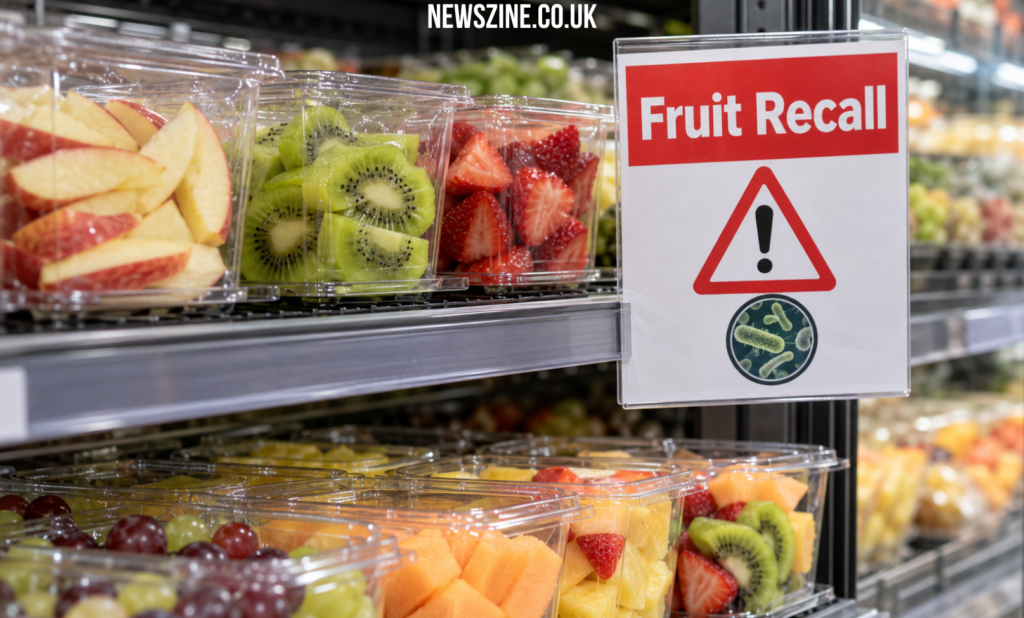
UK Supermarket Fruit Salmonella Recall
A food safety warning issued in June 2026 led several major supermarkets across the United Kingdom to recall selected packs of prepared fruit. The products were removed after concerns emerged about possible Salmonella contamination in fruit ingredients supplied to retailers. The recall affected well-known grocery chains, including Tesco, Asda, Sainsbury’s, Morrisons, Marks & Spencer and Waitrose.
The UK supermarket fruit salmonella recall involved products intended for immediate consumption, including sliced apples, mixed fruit pots and fruit kebabs. These items are commonly purchased as quick snacks because they require no additional preparation. However, the discovery of a potential bacterial hazard meant customers were instructed not to eat the affected products. The incident also highlighted the importance of food hygiene and quality checks within the fresh produce industry.
What Happened During the Fruit Recall?
On 23 June 2026, the Food Standards Agency announced a recall involving several varieties of packaged fruit. The warning followed testing conducted by Prepworld, a company supplying prepared fruit products to major British retailers. Salmonella had been detected in apple and kiwi fruit ingredients associated with the affected production.
The products were distributed under different supermarket names, meaning customers might not immediately recognise that the items shared a common supplier. Once the potential contamination was identified, supermarkets took action to withdraw the products and inform customers about the safety concern.
The recall covered fruit packs carrying specific use-by dates of 23 and 24 June 2026. These dates helped distinguish the products included in the warning from similar items that were not identified as part of the incident.
Which Supermarkets Recalled Fruit Products?
Six supermarket chains were involved in the recall, with each retailer identifying the particular products that needed to be removed from sale. Although some products contained similar ingredients, their packaging and portion sizes varied between stores.
Tesco recalled several prepared fruit products, including mixed melon, kiwi and strawberry packs, kiwi fruit pots and fruit kebabs. The affected items were sold in different serving sizes and were intended to be eaten without further preparation.
Sainsbury’s recalled combinations containing melon, kiwi and strawberries, along with orange and kiwi packs and portions of Pink Lady apples with grapes. Marks & Spencer removed selected packs of sliced Pink Lady apples, including products sold through its café and food-to-go ranges.
Asda’s affected product was a mixed fruit pot containing Pink Lady apple, mango, strawberry and blueberry. Morrisons recalled its kiwi, melon and strawberry combination, while Waitrose identified packaged Pink Lady apples and grapes.
The presence of multiple supermarket brands in one recall showed how food products distributed through a common supplier can affect several retail businesses at the same time.
Why Was Salmonella Found in Prepared Fruit a Concern?
Salmonella is a bacterium capable of causing foodborne illness when contaminated food is consumed. Although it is frequently associated with poultry, eggs and certain animal products, fruits and vegetables can also become contaminated.
The particular concern with packaged fruit is that customers usually eat it directly from the container. Unlike foods that are cooked before serving, these products do not receive a final heating stage that could eliminate harmful bacteria.
Prepared fruit also passes through several handling processes. Workers or machinery may wash, peel, slice, combine and package ingredients before they reach stores. Every stage requires appropriate cleanliness and careful management.
If harmful bacteria are introduced during one part of preparation, they may spread to other ingredients through shared equipment or contact surfaces. Consequently, contamination associated with one type of fruit can create concerns about several finished products.
How Fresh Fruit Can Become Contaminated
Fruit contamination can begin long before a product reaches supermarket shelves. Agricultural conditions, handling practices and processing environments can all influence food safety.
On farms, water used for irrigation may introduce bacteria if it has been contaminated by animal waste. Soil, agricultural equipment and poorly managed fertilisers can also contribute to microbial hazards. These possibilities vary according to the type of produce and growing conditions.
After harvesting, fruit is transported to storage and processing facilities. Containers, transport equipment and handling surfaces need regular cleaning to minimise the chance of contamination.
Prepared fruit facilities introduce another stage of exposure because ingredients are peeled and cut. Equipment must be properly sanitised, and employees must follow established hygiene procedures.
The exact contamination pathway behind the June 2026 incident was not established in the recall announcement. Nevertheless, the case illustrated why food safety controls must operate throughout production rather than only when products are ready for sale.
Health Problems Associated With Salmonella Infection
Salmonella infection, also called salmonellosis, mainly affects the digestive system. Symptoms often include diarrhoea, abdominal cramps, fever, nausea and vomiting. The severity of illness can differ considerably between individuals.
Symptoms generally appear within several hours to a few days after consuming contaminated food. Some individuals recover relatively quickly, while others may experience digestive problems for several days.
A major concern is dehydration, particularly when diarrhoea or vomiting continues for an extended period. Losing too much fluid can cause weakness, dizziness and other complications.
Young children, older people and individuals with weakened immune systems face a greater possibility of serious illness. In some cases, Salmonella can spread beyond the intestines and require medical treatment.
For most healthy adults, recovery involves rest and adequate hydration. Persistent or severe symptoms should be assessed by a healthcare professional rather than ignored.
What Customers Were Told to Do With Recalled Fruit
Customers who had purchased the affected fruit packs were advised to stop using them immediately. Even if the fruit appeared fresh and had no unusual smell, it was not considered appropriate to eat products matching the recall notice.
Shoppers could return the recalled items to the supermarket where they were purchased for a refund. Retailers displayed recall notices to help people identify the relevant packaging, product descriptions and date information.
Anyone storing the affected products at home was encouraged to check their refrigerator and compare the packaging with the recall details. This was especially important because several recalled combinations closely resembled ordinary fruit snack packs.
If an affected package had leaked or its contents had contacted food preparation surfaces, cleaning those areas was a reasonable precaution. Hands and utensils should also be washed after handling potentially contaminated food.
These instructions applied to the June 2026 products identified in the notice rather than every type of packaged fruit sold by the supermarkets.
Why Use-By Dates Played an Important Role
Food labels provide important information about whether a product should still be consumed. In the case of the recalled fruit, the use-by dates helped identify which batches were associated with the contamination concern.
Prepared fruit usually has a short refrigerated shelf life. Once fruit is cut, its internal surfaces become exposed to air, moisture and possible environmental contamination. This makes appropriate storage and handling particularly important.
A use-by date is intended to provide information related to safety. It should not be confused with a best-before date, which generally relates to quality.
The recalled fruit products carried dates in late June 2026. These specific labels allowed consumers to check whether they had purchased an affected item.
However, refrigeration and an unexpired date cannot guarantee safety when contamination has already occurred. That is why recall instructions take priority over an ordinary assessment of freshness.
How Supermarkets Manage Food Recalls
When a supermarket becomes aware that a product may be unsafe, it must identify the affected stock and prevent further sales. The process usually requires coordination between the retailer, supplier and relevant food safety authorities.
Store employees may remove products from shelves, separate affected inventory and display information for customers. Retailers can also communicate through their websites and customer service channels.
Accurate product identification is essential because removing too few items could leave a potential hazard available for purchase. Removing unrelated products may also create unnecessary disruption and food waste.
Traceability records help businesses identify where products were delivered and which batches were involved. These records are particularly valuable when one manufacturer supplies several supermarkets.
The June 2026 recall demonstrated how a safety concern involving one supplier can require coordinated action across different retail chains.
The Importance of Hygiene in Fruit Processing Facilities
Food processing facilities must follow strict hygiene practices to reduce the likelihood of harmful bacteria entering finished products. This is particularly important when food will be eaten without cooking.
Processing areas require appropriate cleaning schedules, equipment maintenance and safe handling procedures. Knives, conveyors, containers and other food-contact surfaces need to be maintained in hygienic condition.
Employees also have an important responsibility. Effective handwashing, suitable protective clothing and proper handling techniques can reduce contamination risks.
Water quality is another consideration. Water used for washing fruit or cleaning equipment must be suitable for its intended purpose. Poorly managed water systems can potentially transfer microorganisms between products.
Temperature control helps preserve prepared fruit and restrict the growth of certain microorganisms, but cold storage is not a complete solution to bacterial contamination.
A reliable food safety programme therefore requires several preventive measures working together.
Why Food Testing Is Necessary
Food testing helps manufacturers identify potential safety problems before products are consumed. Testing may involve raw ingredients, processing environments or finished food samples.
For companies handling ready-to-eat produce, monitoring can provide information about whether hygiene procedures are functioning effectively. Unexpected results may indicate that further investigation is needed.
However, food testing has limitations. Bacteria may not be distributed evenly throughout a large quantity of produce, meaning a clean sample does not necessarily establish that every portion is safe.
Manufacturers therefore need to combine testing with preventive practices, including supplier assessments, sanitation procedures and staff training.
The identification of Salmonella during Prepworld’s testing demonstrated how routine checks can reveal problems that might otherwise remain unnoticed until consumers become ill.
What the Recall Revealed About Food Supply Chains
Modern supermarket supply chains involve several businesses performing different responsibilities. Farmers grow fruit, transport companies move produce, manufacturers prepare ingredients and retailers sell the final packages.
When many businesses rely on the same supplier, one safety issue can affect products sold under several different store brands.
This arrangement makes accurate recordkeeping particularly important. Manufacturers need to know where ingredients originated, how they were processed and where finished products were delivered.
Retailers also require reliable information so they can identify affected stock without unnecessary delays. Communication between suppliers and supermarkets can influence how effectively a recall reaches customers.
The incident involving prepared fruit illustrated the connection between production practices and consumer safety. Problems identified at supplier level may have consequences across a much wider retail network.
Can Consumers Prevent Salmonella Contamination at Home?
Consumers cannot control every stage of food production, but appropriate handling practices can reduce some contamination risks after purchase.
Whole fruit should generally be washed under running water before cutting or eating. Preparing fruit on clean surfaces and using properly washed utensils can also reduce contact with unwanted microorganisms.
Fresh produce should be stored according to the manufacturer’s instructions. Refrigerated fruit packs should not be left at room temperature for extended periods, particularly in warm conditions.
Raw meat and poultry should be kept separate from foods intended to be eaten without cooking. Cutting boards and utensils used for raw animal products should be cleaned thoroughly before being used for fruit.
It is important to understand that washing cannot reliably remove every harmful microorganism from contaminated produce. If a product has been recalled for a possible Salmonella risk, washing it is not an acceptable substitute for following the recall instructions.
How Food Businesses Can Reduce Future Risks
Food businesses can reduce contamination risks by implementing structured safety procedures. One commonly used framework is Hazard Analysis and Critical Control Point, or HACCP.
This approach requires businesses to assess potential hazards during production and establish appropriate controls. For prepared fruit, those controls may include approved suppliers, equipment sanitation, safe water, refrigeration and clearly documented handling practices.
Regular inspections and internal checks help identify weaknesses before they develop into larger problems. Employee training is equally necessary because safety procedures depend on consistent implementation.
Manufacturers should also maintain records that allow ingredients and finished products to be traced efficiently. When contamination is suspected, these records help determine which products need to be withdrawn.
Effective prevention does not depend on a single test or inspection. It requires food safety to remain part of normal daily operations throughout the production process.
What Consumers Should Remember About the Incident
The recalled products were identified in June 2026 and had use-by dates of 23 or 24 June. The warning concerned specific prepared fruit products rather than all fruit sold by the supermarkets involved.
There was no basis in the recall announcement to conclude that every affected pack contained Salmonella. The withdrawal was a precautionary measure taken because contamination had been detected in ingredients associated with the products.
Customers should pay attention to official product recall information whenever a safety notice is announced. Checking the complete product name, weight and relevant date can help avoid confusion with similar products.
The event also reinforces an important distinction between healthy food and microbiologically safe food. Fruit offers nutritional benefits, but proper production, handling and storage remain necessary to protect consumers.
Conclusion
The UK supermarket fruit salmonella recall of June 2026 affected prepared fruit products supplied to six major grocery chains. The warning followed the detection of Salmonella in fruit ingredients associated with Prepworld, resulting in the withdrawal of selected fruit pots, sliced apple products and mixed fruit snacks.
Although the recalled products had a limited shelf life, the incident demonstrated the importance of early contamination detection, reliable product tracking and clear communication between manufacturers and retailers.
For consumers, the main responsibility is to recognise and follow recall instructions rather than relying on a product’s appearance or freshness. For food businesses, the incident reinforces the need for effective hygiene controls, regular monitoring and well-maintained traceability systems. These practices remain essential to reducing foodborne illness risks in prepared fruit and other ready-to-eat products.