
Wollmatten: A Practical Guide to Wool Mats for Homes and Buildings
Wollmatten
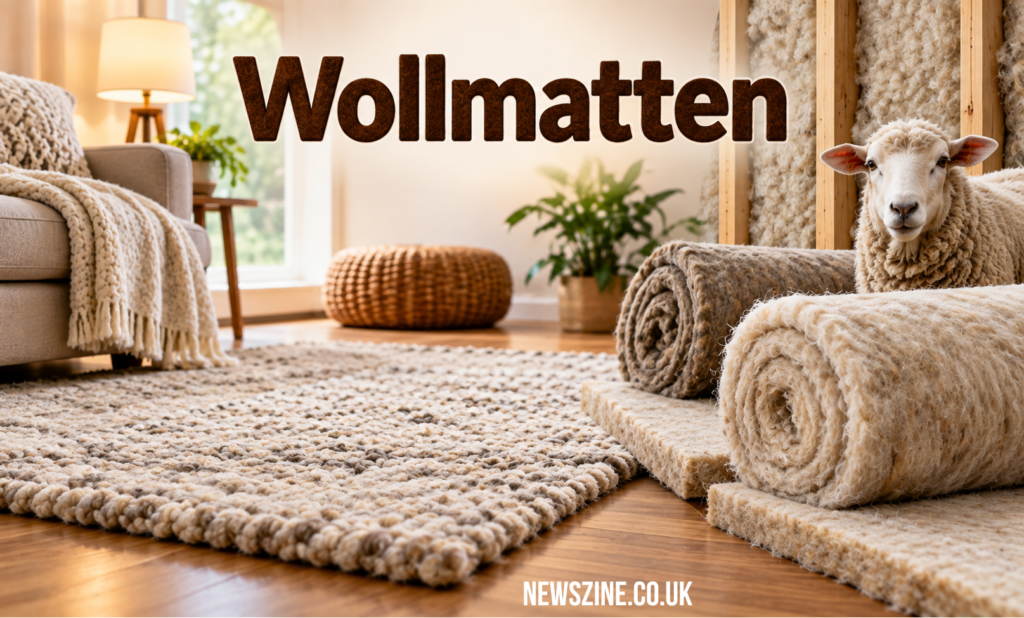
Wollmatten are wool-based mats that can serve very different purposes depending on how they are made. Some are finished products placed on floors to provide a softer walking surface, while others are construction materials fitted behind walls, beneath floors, or within roof structures. The common element is wool, a natural fiber valued for its ability to create a layer of trapped air while remaining flexible.
Although the name sounds like a particular product, Wollmatten is simply the German term for wool mats. This distinction matters because there is no single design or specification that applies to everything sold under this description. A small wool mat for a bedroom and a thick insulation mat for a roof may belong to the same broad category, but they have different construction, performance requirements, and maintenance needs.
What Are Wollmatten Made From?
Sheep wool is the main raw material associated with Wollmatten. After shearing, wool intended for manufacturing goes through several preparation stages before it becomes a finished mat. Depending on the intended use, fibers can be cleaned, arranged, compressed, bonded, or combined with supporting materials to produce the required thickness and strength.
The percentage of wool is not necessarily identical across products. A mat advertised as wool-based may contain additional fibers, backing, binders, or treatments. This is particularly important when comparing products because two items that appear similar can have noticeably different compositions. Checking the material information provides a clearer picture than relying only on the product name.
Why Wool Feels Different From a Hard Surface
Walking directly on stone, tile, concrete, or similar flooring creates immediate contact with a dense surface. Wool changes that experience by adding a flexible layer between the foot and the floor. Its fibers bend slightly under pressure, which gives a mat its cushioned character.
This also explains why a wool-covered area may feel more comfortable during colder periods. The mat does not produce warmth, but it reduces direct contact with the colder floor below. Thickness, construction, and density influence how noticeable this effect becomes, so a lightweight decorative mat will not behave exactly like a dense wool floor covering.
Using Wollmatten Around the Home
Floor Wollmatten can work in bedrooms, living areas, studies, and other rooms where additional comfort is wanted. Smaller versions may be positioned beside a bed or chair, while larger mats can cover the central part of a room. They can also reduce direct wear on the flooring underneath, particularly in places where people regularly walk or furniture is used.
Location should be considered before choosing a mat. A quiet bedroom creates relatively little wear, whereas an entrance or busy hallway exposes the fibers to shoes, dirt, repeated pressure, and frequent cleaning. Selecting a mat according to the room rather than appearance alone can make maintenance easier and improve its useful life.
How Wool Helps Retain Warmth
Much of wool’s insulating ability comes from the way its fibers sit together. They do not form a completely solid mass. Tiny pockets remain between the fibers, holding air within the material. Because this trapped air limits rapid heat movement, wool can act as an insulating layer.
This principle applies whether the material is beneath someone’s feet or hidden within a building. The scale and required performance are different, however. A floor mat mainly improves comfort in a limited area, while construction insulation is expected to contribute to the thermal performance of a much larger part of the property.
Wollmatten as Building Insulation
Construction-grade wool mats are made to fit into spaces where unwanted heat transfer needs to be reduced. Depending on the building, they can be installed around timber framing, between roof members, beneath certain floors, or within suitable partition systems. Their flexible form can make them useful where insulation needs to follow the shape of a cavity.
Good installation remains essential. Leaving empty spaces around insulation can reduce its effectiveness, while excessive compression can change the thickness for which the product was designed. Builders therefore need to follow the technical specifications of the particular insulation rather than treating all sheep-wool products as interchangeable.
Wool and Changes in Indoor Humidity
Wool can interact with moisture present as vapor in the surrounding air. Under certain conditions, its fibers take up some moisture and can release it again as conditions change. This behavior is one reason wool is often considered for interiors where natural materials are preferred.
There is an important limit to this benefit. Handling ordinary humidity is completely different from remaining wet after direct water exposure. A wool mat should not be expected to solve condensation, leaking pipes, roof damage, or poor ventilation. Persistent moisture should always be traced to its source and corrected.
What Happens When Wollmatten Get Wet?
A small spill on a floor mat does not necessarily mean the product is damaged, particularly when it is handled quickly and according to its care instructions. Problems become more likely when wool stays saturated for an extended period. Drying can take time, and prolonged dampness may affect shape, cleanliness, or odor.
Water exposure is more concerning with hidden insulation because the surrounding structure may also be affected. If insulation becomes wet because of a leak, simply waiting for the wool to absorb or release moisture is not an adequate response. The source of the water must be repaired, and the affected construction should be assessed before it is closed again.
Sound Reduction in Rooms
Rooms containing mostly hard materials often have more noticeable echoes and reflected noise. Introducing a fibrous floor covering changes how some sound behaves within the space. Rather than reflecting everything immediately from the floor, a wool mat can absorb part of the sound reaching its surface.
This can be useful in living rooms, bedrooms, offices, and other areas where a less echoing environment is preferred. Wool insulation inside a partition may also form part of an acoustic construction, although true sound isolation depends on the entire wall or floor system rather than the insulation material alone.
Durability of Wool Mats
Wool fibers have a degree of natural flexibility, which helps them respond to repeated pressure. A good floor mat can therefore remain useful for a long period when its construction matches the amount of traffic it receives. Heavy furniture, constant walking, dirt, and unsuitable cleaning can still gradually change its appearance.
Quality makes a significant difference here. Density, fiber selection, manufacturing method, backing, and finishing can all influence durability. This means it is difficult to judge longevity simply by seeing that a product contains wool. A mat intended for decorative use may not be suitable for a busy entrance even if both products use similar fibers.
Cleaning and Looking After Wollmatten
Regular removal of loose dust is one of the simplest ways to maintain a wool floor mat. Dirt left inside the fibers can be worked deeper into the material through everyday foot traffic. Appropriate vacuuming can help prevent this buildup, provided the cleaning method is suitable for the particular construction.
Spills are better handled promptly than left until they dry. Excessive scrubbing, very hot water, or aggressive cleaning products can cause problems with some wool materials. Care labels and manufacturer instructions should therefore take priority over a general cleaning method. Professional cleaning may be more appropriate for larger mats or difficult stains.
Natural Wool Versus Synthetic Mats
Synthetic mats are widely available because they can be inexpensive, consistent, and relatively easy to maintain. Some are particularly useful in locations where frequent washing or exposure to dirt is expected. Wool competes differently, offering a natural fiber surface with its own combination of softness, insulation, resilience, and moisture behavior.
Neither material automatically suits every room. A washable synthetic mat may be more practical near an entrance that regularly becomes wet, while wool may be preferred for a bedroom or sitting area where comfort is more important. The decision becomes easier when the conditions of the room are considered before the material.
Environmental Questions Around Wool
Wool is renewable in the sense that sheep produce fleece repeatedly, but that fact alone does not describe the complete environmental impact of a Wollmatte. Sheep farming, wool processing, transportation, washing, coloring, treatments, backing materials, and manufacturing all contribute to the final product’s environmental footprint.
Longevity also deserves attention. Products that remain functional for years do not need to be replaced as frequently. Buyers interested in environmental considerations can therefore look at wool content, manufacturing information, durability, added materials, and disposal options rather than relying only on a “natural” label.
Are All Wollmatten Completely Natural?
Not necessarily. Even when wool is the main visible material, other components may be present. Floor mats can include non-wool backing, dyes, adhesives, or reinforcing fibers. Insulation products may contain supporting fibers or treatments intended to protect the material or satisfy particular performance requirements.
People specifically looking for a high-wool or low-synthetic product should read the composition information carefully. A percentage figure is more useful than assuming that every product described as Wollmatten contains only untreated sheep wool.
Important Points for Insulation Use
Selecting insulation involves more than deciding whether a material feels natural or comfortable. Building products need measurable performance. Buyers and installers should consider thermal specifications, thickness, fire classification, moisture requirements, product certification, installation instructions, and applicable building rules.
The surrounding construction matters just as much. An effective roof or wall relies on several components working together. Insulation cannot compensate for uncontrolled air leakage, persistent water entry, missing structural protection, or badly designed ventilation. Wollmatten should therefore be treated as one part of a complete building system.
Possible Drawbacks to Consider
Price may be an issue when wool products are compared with widely produced synthetic alternatives. Availability can also differ considerably between regions. Floor mats may require more careful cleaning, while wool insulation may be less familiar to contractors who normally work with conventional products.
There are also locations where wool is simply not the most practical material. Constantly wet spaces, areas exposed to severe dirt, or applications requiring a particular technical specification may favor another option. Recognizing these limits helps prevent unrealistic expectations about what wool can achieve.
Choosing the Right Wollmatten
Start with the intended location rather than the material name. For a floor product, consider dimensions, thickness, expected traffic, surface feel, backing, cleaning requirements, and the amount of wool used. A mat for a quiet bedroom can be chosen differently from one expected to handle daily activity in a family living room.
For insulation, purchasing decisions should be based on technical documentation. The correct thickness, thermal rating, fire information, treatment details, installation method, and compatibility with the building should all be checked. Products designed for decorative flooring should never be treated as substitutes for certified construction insulation.
Conclusion
Wollmatten are best understood as a broad family of wool-based mats rather than one standardized item. In the home, they can provide a softer floor surface, reduce the cold feeling of hard flooring, and absorb some everyday room noise. In construction, specially manufactured wool mats can function as thermal and acoustic insulation when they are correctly specified and installed.
Their usefulness comes from the characteristics of wool, but those characteristics have practical limits. Wool can interact with humidity, yet it should not remain soaked. It can provide insulation, but performance depends on thickness and installation. It is a natural fiber, although finished products may contain additional materials. Looking at composition, intended use, care requirements, and technical specifications provides a more reliable way to choose Wollmatten than judging them by the name alone.